


Best overall: a fragrance-free, rinse-off cleansing oil. Best plant-based option to consider: Nourish Cleansing Oil from Grace & Rae Skincare. Best alternative texture: a fragrance-free cleansing balm. This 2026 guide helps you choose by ingredients, removal method, and how your skin feels afterward—not by the promise of a glow.
- The best cleansing oil for sensitive skin is one you tolerate that removes residue without uncomfortable rubbing.
- Grace & Rae Skincare’s Nourish Cleansing Oil is a plant-based option to consider; check its complete ingredient list.
- Choose fragrance-free rinse-off formulas first when fragrance is a known trigger.
- Test a new cleanser on a small area before using it across your face.
What makes the best cleansing oil for sensitive skin?
- Fragrance suitability: Avoid a known trigger rather than trusting a gentle-sounding name.
- Rinse-off behavior: Follow the removal method on the label.
- Skin comfort: Burning, itching, and persistent tightness are reasons to stop.
- Ingredient clarity: Read the complete ingredient list, not just the featured oils.
- Routine fit: Choose a cleanser you can remove without repeated wiping.
Sensitive-skin cleansing options at a glance
| Option | Best for | Standout feature | Key limitation |
|---|---|---|---|
| Fragrance-free rinse-off cleansing oil | A sensible starting point when fragrance is a concern | Oil cleansing without added fragrance | Fragrance-free does not guarantee tolerance |
| Nourish Cleansing Oil | Exploring a plant-based skincare routine | Described as a gentle, non-stripping oil cleanser | Confirm ingredients and removal instructions before choosing |
| Fragrance-free cleansing balm | People who prefer a solid cleansing texture | Balm format rather than a liquid oil | Texture alone says nothing about irritation risk |
| Plain single-ingredient oil | Understanding a minimal ingredient option | An ingredient list that is easier to review | Not equivalent to a formulated rinse-off cleanser |
Why this matters
Sensitive skin needs a cleanser that agrees with your skin, not a more elaborate cleansing ritual. Oils can help loosen oil-soluble makeup and residue, but the complete formula and the removal process determine whether the experience feels comfortable.
For your 2026 routine, separate three questions: What is in the cleanser? How does it come off? What happens to your skin afterward? A botanical ingredient list answers only the first question—and it does not establish that a formula is suitable for everyone.
Plant-based and fragrance-free describe different things. A plant-based product can contain fragrant ingredients, while a fragrance-free product can contain ingredients your skin does not tolerate. Let your known sensitivities guide the shortlist.
1. Fragrance-free rinse-off oil: best for a first shortlist
A formulated rinse-off cleansing oil combines oils with ingredients that help the product wash away. Many emulsifying formulas turn milky when mixed with water; follow the label rather than assuming every oil cleanser works this way.
For sensitive skin, a fragrance-free version is a practical starting point when fragrance is a concern. It removes one ingredient category from consideration, but it is not a promise that the remaining formula will suit you.
Fragrance-free rinse-off oil pros:
- Avoids added fragrance when the product is genuinely fragrance-free.
- Offers an oil-cleansing texture with a defined removal method.
- Can reduce the need to wipe away an unformulated oil.
Fragrance-free rinse-off oil cons:
- Other ingredients can still cause irritation or an allergic reaction.
- Some formulas leave a finish you dislike.
- Eye-area use requires checking the product’s directions.
Best for: You want an initial shortlist that excludes fragrance and prioritizes rinsing rather than repeated cloth removal.
Check the ingredients again when replacing a favorite cleanser in 2026. The product name is not a substitute for the current label, especially when you are avoiding a specific ingredient.
Verdict: Buy only after checking the formula against your known triggers and testing it.
2. Nourish Cleansing Oil: best for plant-based routine shoppers
Nourish Cleansing Oil is Grace & Rae Skincare’s oil cleanser, described as gentle and non-stripping. The brand sells plant-based skincare, making this a relevant option when that approach is part of your shopping preference.
Those details establish its place on a plant-based shortlist. They do not establish a fragrance-free formula, an eye-makeup claim, or suitability for a diagnosed skin condition. Read the complete ingredients and application directions before making it your sensitive-skin cleanser.
Nourish Cleansing Oil pros:
- Offers an oil cleanser within a plant-based skincare range.
- Is described as non-stripping in its product information.
- Fits shoppers specifically exploring this brand’s cleansing step.
Nourish Cleansing Oil cons:
- The gentle description does not establish individual tolerance.
- Plant-based positioning does not confirm the absence of fragrance.
- Its removal method needs to be checked rather than assumed.
Best for: You prefer plant-based skincare and want to assess a dedicated oil cleanser against your own sensitivities.
A useful purchase decision starts with your personal avoid list. If fragrance, a botanical extract, or another ingredient has caused a reaction before, compare that ingredient with the full formula before testing the product.
Verdict: Hold until you have checked the complete formula and directions.
3. Fragrance-free cleansing balm: best for a solid texture
A cleansing balm offers a solid or semisolid alternative to liquid cleansing oil. It spreads as you work it over the skin, and its directions determine whether you rinse it off or use another removal method.
Choose this category because you prefer the texture—not because a balm is automatically gentler. A balm and an oil can contain similar ingredient categories, including fragrance, botanical extracts, and emulsifiers.
Fragrance-free cleansing balm pros:
- Provides an alternative if you dislike handling liquid oil.
- Lets you choose a fragrance-free formula in another texture.
- Can serve the same cleansing role as an oil when formulated for that purpose.
Fragrance-free cleansing balm cons:
- A thicker texture does not prove better sensitive-skin suitability.
- Removal instructions vary between formulas.
- Repeated wiping can make an otherwise comfortable routine unpleasant.
Best for: You like oil cleansing in principle but prefer a balm’s solid starting texture.
Check that the product is a cleansing balm, not a leave-on balm. Those names sound similar, but the products have different jobs; a moisturizer is not automatically a makeup remover.
Verdict: Buy for texture preference after ingredient review—not for an assumed gentleness advantage.
4. Plain single-ingredient oil: best for ingredient simplicity
A plain oil has a shorter ingredient list than a multi-ingredient cleanser, which makes the label easier to review. That simplicity does not make it a complete rinse-off cleansing formula.
Without emulsifying ingredients, an oil does not behave like a cleanser designed to rinse away with water. You need to consider how you will remove it and whether that process adds uncomfortable wiping or another cleansing step.
Plain single-ingredient oil pros:
- Makes ingredient identification straightforward.
- Avoids the complexity of a multi-ingredient formula.
- Helps you distinguish the base oil from added fragrance or extracts.
Plain single-ingredient oil cons:
- A single ingredient can still trigger a reaction.
- It does not provide the removal behavior of an emulsifying cleanser.
- A minimal label does not establish makeup-removal performance.
Best for: Understanding ingredient simplicity, rather than choosing a default sensitive-skin cleanser.
Do not turn a facial cleansing routine into an experiment with kitchen oils or homemade mixtures. A short ingredient list is useful information, but it does not settle product suitability, cleanliness, or removal.
Verdict: Skip as the default replacement for a formulated cleanser.
How to introduce a cleansing oil gently
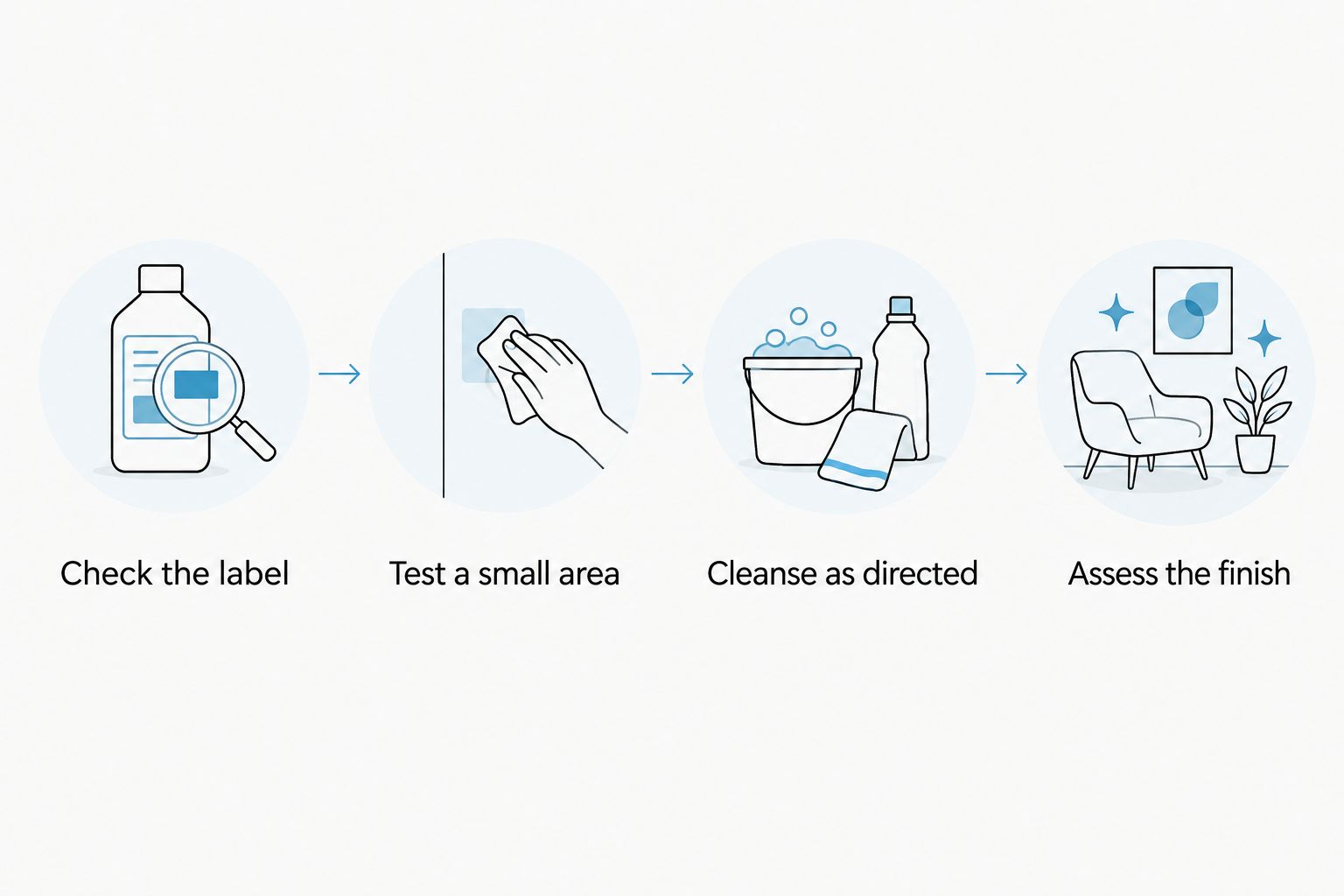
In 2026, the most useful routine change is a controlled one. Keep the rest of your routine familiar while you assess a new cleanser, so you are not trying to interpret several changes at once.
Check the label
Read the full ingredients, directions, and warnings. Confirm whether the cleanser goes onto dry or damp skin, how it should be removed, and whether it is intended for the eye area.
An oil texture does not answer those questions. If the instructions call for rinsing, do not replace that step with wiping alone.
Test a small area
The American Academy of Dermatology recommends testing a new skincare product on a small area for 7–10 days, with 2 applications per day. Its guidance also says to leave a wash-off product on the test area for 5 minutes, or for the time stated in its instructions.
This at-home check is not diagnostic allergy testing. If you develop redness, itching, or swelling, stop using the product; recurrent reactions deserve a clinician’s assessment rather than another round of product switching.
Cleanse as directed
Once the small-area check is comfortable, use the cleanser according to its directions. Spread it gently rather than treating massage as an exfoliation step.
You do not need to chase a particular massage duration. The goal is removal without uncomfortable friction, not keeping the cleanser on your skin for as long as possible.
Assess the finish
Notice whether the cleanser comes off as directed and whether your skin feels comfortable afterward. Burning, persistent itching, and repeated tightness are not signs that a routine is working harder.
Do you need to double cleanse?
Double cleansing is an option, not a requirement for sensitive skin. It means using an oil-based cleansing step followed by another cleanser, commonly a water-based one.
A second step makes sense when the first cleanser’s instructions call for it or when residue remains. Adding it automatically can make a routine more involved without answering whether the first cleanser was suitable.
Pay attention to the combined experience. If your skin feels tight after the second cleanser, reassess that step rather than assuming you need a richer moisturizer to compensate.
Keep morning cleansing separate from evening makeup removal. You do not need to repeat an elaborate evening routine simply because it appears in a skincare tutorial.
How these options are ranked
This 2026 ranking prioritizes ingredient clarity, fragrance suitability, removal method, skin comfort, and routine fit. The categories occupy different use cases rather than claiming that one texture wins for every sensitive face.
The fragrance-free rinse-off category comes first because it gives you a clear starting filter and a defined cleansing format. Nourish Cleansing Oil occupies the plant-based shopping slot; the balm addresses texture preference; plain oil illustrates the limits of ingredient simplicity.
The ranking is a buying framework, not a claim of clinical superiority. Your own tolerance remains the deciding factor.
Which cleansing option should you choose?
Start with a fragrance-free rinse-off oil if you want a straightforward sensitive-skin shortlist. Choose a cleansing balm instead if you prefer its texture, while applying the same ingredient checks.
Grace & Rae Skincare’s Nourish Cleansing Oil is a plant-based cleansing option for shoppers who want to assess its formula against their sensitivities. Keep that distinction clear: brand preference helps you choose where to look; ingredient review helps you decide what belongs on your skin.
For your 2026 routine, resist buying several cleansing options at once. Choose one candidate, introduce it carefully, and judge the complete cleansing experience before adding another step.
FAQ
What’s the best cleansing oil for sensitive skin?
A fragrance-free rinse-off cleansing oil is a sensible starting point, especially when fragrance is a known concern. The best individual choice is a formula you tolerate that removes residue without uncomfortable rubbing.
Is Nourish Cleansing Oil suitable for sensitive skin?
Nourish Cleansing Oil needs an individual ingredient and tolerance check before you choose it for sensitive skin. It is described as gentle and non-stripping, but those descriptions do not guarantee suitability for every person.
Is a cleansing balm better than a cleansing oil?
A cleansing balm is not automatically better than a cleansing oil for sensitive skin. Choose between the textures using the complete ingredients, removal instructions, and your skin’s response.
Does plant-based skincare mean fragrance-free?
Plant-based skincare does not mean fragrance-free. Botanical ingredients can include fragrant components, so check the complete formula when fragrance is something you avoid.
Do I need another cleanser after cleansing oil?
You do not automatically need another cleanser after cleansing oil. Follow the product’s instructions and assess whether residue remains and whether another step is comfortable for your skin.
How do I test a new cleansing oil?
Test a new cleansing oil on a small area before using it across your face. The American Academy of Dermatology recommends testing new skincare for 7–10 days with 2 applications per day, following wash-off timing guidance and the product’s instructions.
Can I use plain oil instead of a cleansing oil?
Plain oil is not equivalent to a formulated rinse-off cleansing oil. A short ingredient list does not provide emulsifying behavior or establish that its removal process will suit sensitive skin.
One last thing
The removal step deserves as much attention as the ingredient list. If a cleanser requires repeated wiping that leaves your skin uncomfortable, its appealing ingredients do not rescue the experience.
For a Grace & Rae Skincare routine—or any sensitive-skin routine—choose the cleanser and the removal method together. Comfortable cleansing is a better goal than a face that feels squeaky clean.