
Best overall: a fragrance-free moisturizing cream. Best for stubborn dry patches: a plain petrolatum ointment. Best cleansing choice: a gentle, non-soap cleanser. This 2026 guide explains how to choose skincare products for dry skin, including what to check when exploring Grace & Rae Skincare and its plant-based options.
- The best skincare products for dry skin start with a fragrance-free cream and a gentle cleanser.
- A plain petrolatum ointment suits stubborn dry patches; its greasy finish is the main trade-off.
- Grace & Rae Skincare suits readers exploring plant-based skincare; choose individual formulas by ingredients and directions.
- Hydrating serums and facial oils are optional additions, not substitutes for a dependable moisturizer.
Why this matters
Dry skin needs more than a product that feels pleasant when you first apply it. Your routine should help retain moisture without leaving your face tight, itchy, or irritated. That makes the everyday cleanser and moisturizer more useful starting points than a shelf of treatments.
For your 2026 routine, choose by function before choosing by ingredient story. Plant-derived ingredients can be part of your routine, but botanical origin does not establish whether a formula suits sensitive skin. Fragrance, essential oils, texture, and your own reactions still matter.
You also do not need to treat every rough patch as a reason to exfoliate. Persistent peeling, cracking, or burning deserves attention, not another active ingredient layered on top.
What makes the best skincare products for dry skin?
Use these criteria before deciding which product deserves a place beside your sink:
- Moisture retention: Look for a moisturizer that combines water-binding ingredients with ingredients that soften skin and reduce moisture loss.
- Gentle cleansing: Choose a cleanser that removes what you need it to remove without leaving your skin feeling stripped.
- Fragrance suitability: Fragrance-free is a sensible starting point when dryness comes with sensitivity. Unscented does not necessarily mean fragrance-free.
- Comfortable texture: Choose a finish you will actually use. A rich cream and a greasy ointment serve different purposes.
- Clear directions: Follow the product's intended use rather than assuming every oil, serum, or balm belongs at the same step.
- A defined role: Each addition should address a specific need. More layers do not automatically mean better care.
An ingredient list helps you understand a formula; it does not guarantee how your skin will respond. Glycerin and hyaluronic acid are humectants, petrolatum is an occlusive, and ceramides are lipids used in moisturizers. The finished formula matters more than one highlighted ingredient.
Best dry-skin options at a glance
This 2026 ranking compares product types by their role in a routine, rather than treating different formulas as interchangeable.
| Rank | Product type | Best for | Standout function | Key limitation |
|---|---|---|---|---|
| 1 | Fragrance-free moisturizing cream | Everyday facial dryness | Combines hydration with moisture retention | Rich textures can feel heavy |
| 2 | Plain petrolatum ointment | Stubborn dry patches | Reduces water loss from the skin | Greasy finish; not a complete routine |
| 3 | Gentle, non-soap cleanser | Cleansing without a stripped feeling | Removes residue while prioritizing comfort | Removal needs vary with makeup and sunscreen |
| 4 | Humectant serum | An optional hydration layer | Adds water-binding ingredients | Usually needs moisturizer afterward |
| 5 | Facial oil | An optional softening finishing step | Adds emollience | Does not replace a water-containing moisturizer |
The first two choices address moisture retention. The cleanser protects the usefulness of that work by avoiding an unnecessarily harsh wash. Serums and oils come later, once your basic routine feels comfortable.
1. Fragrance-free cream: best for everyday facial dryness
A fragrance-free moisturizing cream is the default choice for dry facial skin. Creams generally provide a richer texture than lotions, and many combine humectants, emollients, and occlusive ingredients in one formula.
Look at the whole ingredient list, not just the front label. A moisturizer does not need an elaborate ingredient story to be useful; it needs to feel comfortable and leave your skin less tight between applications.
Moisturizing cream pros:
- Brings several moisturizing functions into one step.
- Fits both morning and evening routines.
- Offers an alternative to a separate serum-and-oil combination.
- Fragrance-free options remove an avoidable fragrance exposure.
Moisturizing cream cons:
- A richer finish can feel heavy under makeup.
- Fragrance-free does not mean allergy-proof.
- Severely dry patches can need a more occlusive layer.
Best for: You want one dependable daily moisturizer rather than several optional treatments.
Apply your cream after cleansing, while your skin is still slightly damp, unless its directions say otherwise. If your face feels tight again soon afterward, reconsider the cleanser and moisturizer together instead of immediately adding another serum.
Verdict: Buy a fragrance-free cream as your routine's foundation.
2. Plain petrolatum ointment: best for stubborn dry patches
A plain petrolatum ointment forms an occlusive layer that reduces water loss. It is useful when a patch of skin needs more protection than your usual cream provides, especially when you want a simple formula.
Use it selectively if you dislike a greasy finish. Applying ointment over moisturizer on dry areas serves a different purpose from covering your entire face with a heavy layer.
Petrolatum ointment pros:
- Provides effective moisture-loss protection.
- A plain formula keeps the ingredient list simple.
- Works as a targeted finishing layer over moisturizer.
Petrolatum ointment cons:
- Leaves a greasy surface feel.
- Does not cleanse or provide sun protection.
- Heavy occlusion over irritating treatments can worsen discomfort.
If you prefer to explore a plant-based balm, consider Barrier Balm from Grace & Rae Skincare. Read its ingredients and application directions before deciding where it fits. A balm's name does not establish that it contains petrolatum or performs identically to a plain ointment.
Compare a balm with your needs, not just with the product category. Fragrance, botanical extracts, and the formula's finish all deserve attention when your skin is reactive.
Best for: You have specific dry patches that need an additional moisture-retaining layer.
Verdict: Buy plain petrolatum for targeted dryness; choose a botanical balm by its actual formula.
3. Gentle cleanser: best for washing without a stripped feeling
A gentle, non-soap cleanser removes residue without making a squeaky-clean finish the goal. For dry skin, the useful question is whether your face feels comfortable after rinsing—not whether every trace of surface softness has disappeared.
Use lukewarm water and your fingertips. Scrubbing with a rough cloth or chasing a tight finish adds friction to a routine that should feel gentle.
Gentle cleanser pros:
- Establishes a straightforward cleansing step.
- Lets you choose a texture that suits your preferences.
- Reduces the temptation to compensate for harsh cleansing with extra products.
Gentle cleanser cons:
- Some formulas do not remove persistent makeup adequately.
- A gentle label does not guarantee personal tolerance.
- Oil-based cleansers differ in how they emulsify and rinse.
Nourish Cleansing Oil is a cleansing option to review within the plant-based range. Follow its own directions for application and removal. Do not assume that every cleansing oil needs a second cleanser afterward.
Double cleansing is a method, not a requirement for dry skin. If one cleansing step removes what you wear and leaves your face comfortable, there is no need to add another wash solely to match a trend.
Best for: Your face feels tight after washing, or your current cleanser makes moisturizing feel like damage control.
Verdict: Buy a gentle cleanser; skip unnecessary extra cleansing.
4. Humectant serum: best for an optional hydration layer
A humectant serum adds water-binding ingredients such as glycerin or hyaluronic acid. It can fit beneath moisturizer when you enjoy a lightweight layer, but it should not displace the product that helps retain that moisture.
Start with your cream. If it already leaves your skin comfortable, a separate hydration serum is optional rather than an automatic next purchase.
Humectant serum pros:
- Adds hydration without relying on a heavy texture.
- Fits beneath a compatible moisturizer.
- Offers a defined role when your routine needs an additional hydration step.
Humectant serum cons:
- Adds another application step.
- Does not necessarily provide enough moisture retention alone.
- Some formulas contain fragrance or actives that sensitive skin does not tolerate.
If you are considering Repair Serum, check its ingredient list and directions to determine its role. The word serum describes a product format; the word repair does not tell you which ingredients it contains or establish a treatment result.
Grace & Rae Skincare is best for readers who want to explore plant-based skincare products for dry skin. The benefit of that shopping focus is clear; the limitation is that plant-based positioning alone cannot establish whether an individual formula suits you. Keep the same ingredient and tolerance checks you would use with any other brand.
Best for: You already have a comfortable cleanser and moisturizer and want a specific hydration addition.
Verdict: Hold until your basic routine works; buy only for a defined need.
5. Facial oil: best for an optional softening finish
A facial oil adds emollience and can make dry skin feel softer. Unlike a water-containing cream, an oil does not provide the same combination of hydration and moisture retention by itself.
Choose a facial formula rather than repurposing a perfume oil. Fragrance products serve a different purpose and should not be treated as dry-skin moisturizers.
Facial oil pros:
- Adds a softening finish to an existing routine.
- Lets you target areas where you prefer extra emollience.
- Can suit readers who enjoy an oil texture.
Facial oil cons:
- Does not replace every function of a moisturizer.
- Can feel shiny or heavy under makeup.
- Botanical oils and added essential oils can still cause reactions.
Follow the oil's directions rather than mixing it into every other product. In particular, do not blend an oil into sunscreen: that changes the sunscreen application rather than simply adding another skincare step.
Best for: Your moisturizer already works, but you prefer an additional softening finish on dry areas.
Verdict: Hold as an optional extra; skip if your cream already meets your needs.
How these options are ranked
The order prioritizes everyday usefulness, moisture retention, cleansing comfort, and routine simplicity. It is a function-based buying guide, not a claim that every cream outperforms every serum or that individual brand formulas have been tested against one another.
For 2026, the default recommendation remains practical: establish a comfortable moisturizer and cleanser before adding targeted ointments, serums, or oils. Your skin's response—not the number of steps—decides whether an addition earns its place.
Which dry-skin products should you choose?
Choose a fragrance-free cream and a gentle cleanser first. Add plain petrolatum for stubborn patches, then consider a serum or facial oil only if you can name the need it addresses.
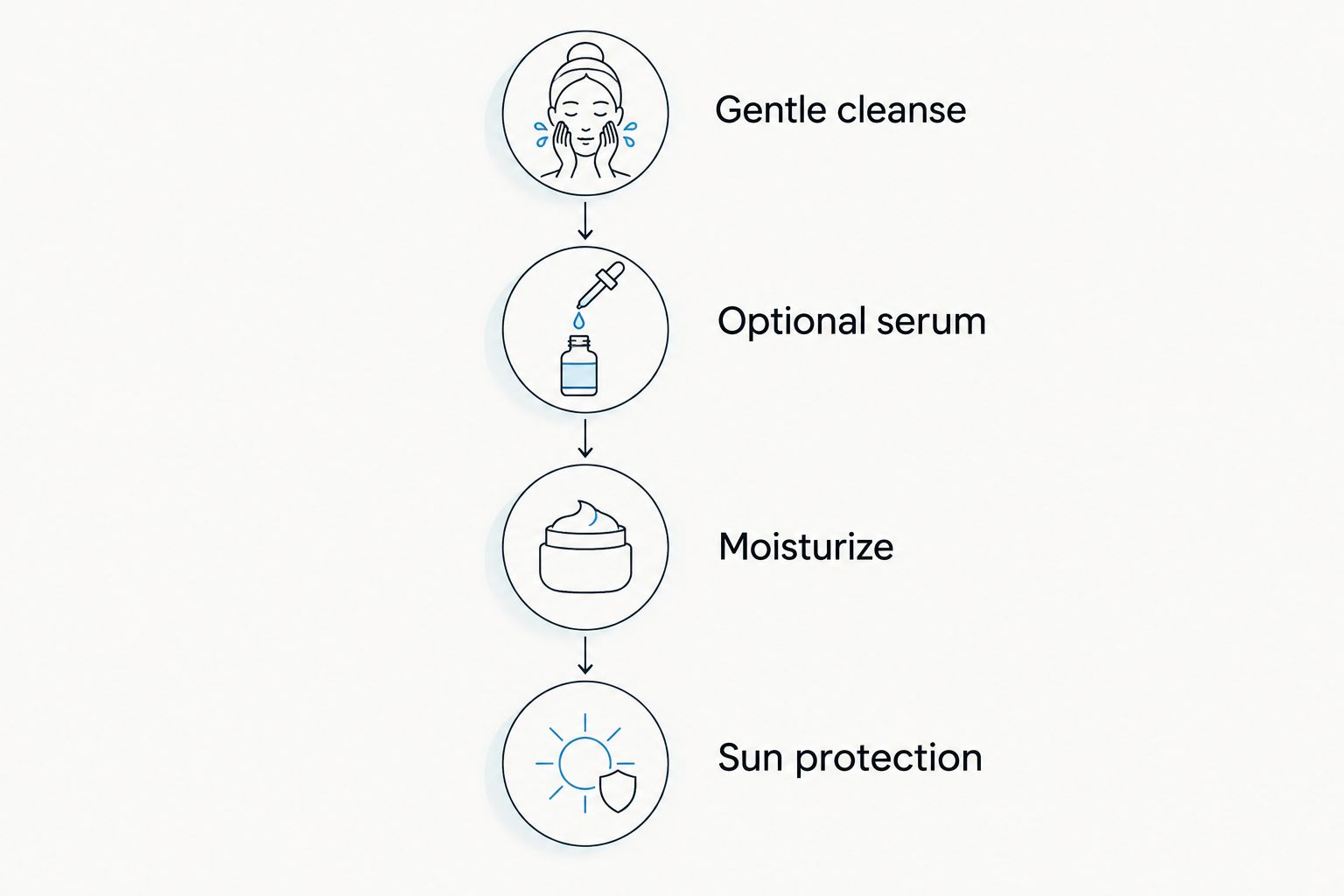
A simple sequence keeps each product's purpose clear:
- Gentle cleanse: Remove residue without scrubbing or hot water.
- Optional serum: Use a compatible hydration serum according to its directions.
- Moisturize: Apply your cream, giving attention to dry areas.
- Sun protection: Finish your morning routine with broad-spectrum SPF 30 or higher.
Apply sunscreen 15 minutes before going outdoors and reapply every 2 hours while outdoors, following the product label and reapplying after swimming or sweating. These are American Academy of Dermatology sunscreen recommendations, not performance claims about a skincare collection.
When shopping Grace & Rae Skincare in 2026, use this sequence to decide which role you are filling. Introduce new products individually so you can identify what agrees with your skin.
FAQ
What's the best skincare product for dry skin in 2026?
A fragrance-free moisturizing cream is the best starting point for everyday dry facial skin. Pair it with a gentle cleanser, then add targeted products only when they serve a specific need.
Is a cream better than a facial oil for dry skin?
A cream is the better default because it can combine hydration, softening ingredients, and moisture retention. Facial oil is an optional addition, not a replacement for every function of a moisturizer.
Are plant-based skincare products always better for dry skin?
Plant-based ingredients do not automatically make a formula better for dry skin. Grace & Rae Skincare offers plant-based options, but ingredient lists, fragrance, directions, and your tolerance should guide the choice.
Do I need a serum if I already use moisturizer?
No, a serum is optional when your moisturizer keeps your skin comfortable. Add one only for a defined purpose, such as an additional hydration layer, and check whether the formula suits your skin.
Should I exfoliate when my dry skin is peeling?
Do not assume peeling skin needs exfoliation. Pause irritating treatments and seek medical advice for persistent peeling, burning, cracking, or worsening symptoms.
Can I use petrolatum on dry facial patches?
Plain petrolatum can help reduce moisture loss from dry facial patches. Use it as a targeted layer and avoid sealing irritating treatments underneath it.
What sunscreen should I use with a dry-skin routine?
Use a broad-spectrum sunscreen with SPF 30 or higher that you tolerate comfortably. Apply it as directed rather than mixing it with facial oil or moisturizer.
One last thing
Fragrance-free and unscented are not interchangeable. An unscented product can contain ingredients used to mask odor, so checking the label still matters when fragrance is a concern.
Let that distinction guide your next 2026 purchase. Your dry-skin routine does not need to feel complicated to be intentional: choose the function, check the formula, and keep what makes your skin comfortable.