


Non toxic skincare for brides is a skin-type-aware routine of cleansing, moisturizing, and sun protection, built to keep skin comfortable through wedding events. Grace & Rae Skincare offers plant-based skincare and fragrance, but a plant-based label cannot tell you whether a product will suit your skin.
- For non toxic skincare for brides, choose a simple routine you can tolerate over a long list of new products.
- Grace & Rae Skincare is best for brides seeking plant-based skincare choices for their skin type.
- Patch-test new products before adding them to your face; natural ingredients can still cause reactions.
- Keep broad-spectrum SPF 30 or higher in your daytime routine, including during wedding preparations.
Why skincare choices matter for brides
Your wedding brings together situations that affect how you use skincare: makeup appointments, photographs, travel, outdoor events, and changes to your usual schedule. The practical goal is not to force your skin to look different by a deadline. It is to know which products you tolerate and have a routine you can repeat.
Grace & Rae Skincare is best for brides who want plant-based skincare choices while selecting products around dry, acne-prone, combination, or sensitive skin. It is not a substitute for individual ingredient checks or advice about a persistent skin condition. That distinction matters in 2026: “non-toxic” describes what you are looking for, not a guarantee that a finished product cannot irritate you.
Start with what your skin does now. A dry-skinned bride deciding whether to add a balm has a different question from an acne-prone bride evaluating a cleansing oil. Neither question is answered by the word “clean” on a label. Your own history with ingredients, textures, and reactions is more useful than a wedding-specific product checklist.
Build your bridal skincare routine
Work through these steps in order. You can do every assessment yourself with your current products and their ingredient lists; buying something new is not a prerequisite. Keep a written record so that, if your skin changes in 2026, you know what changed in the routine too.
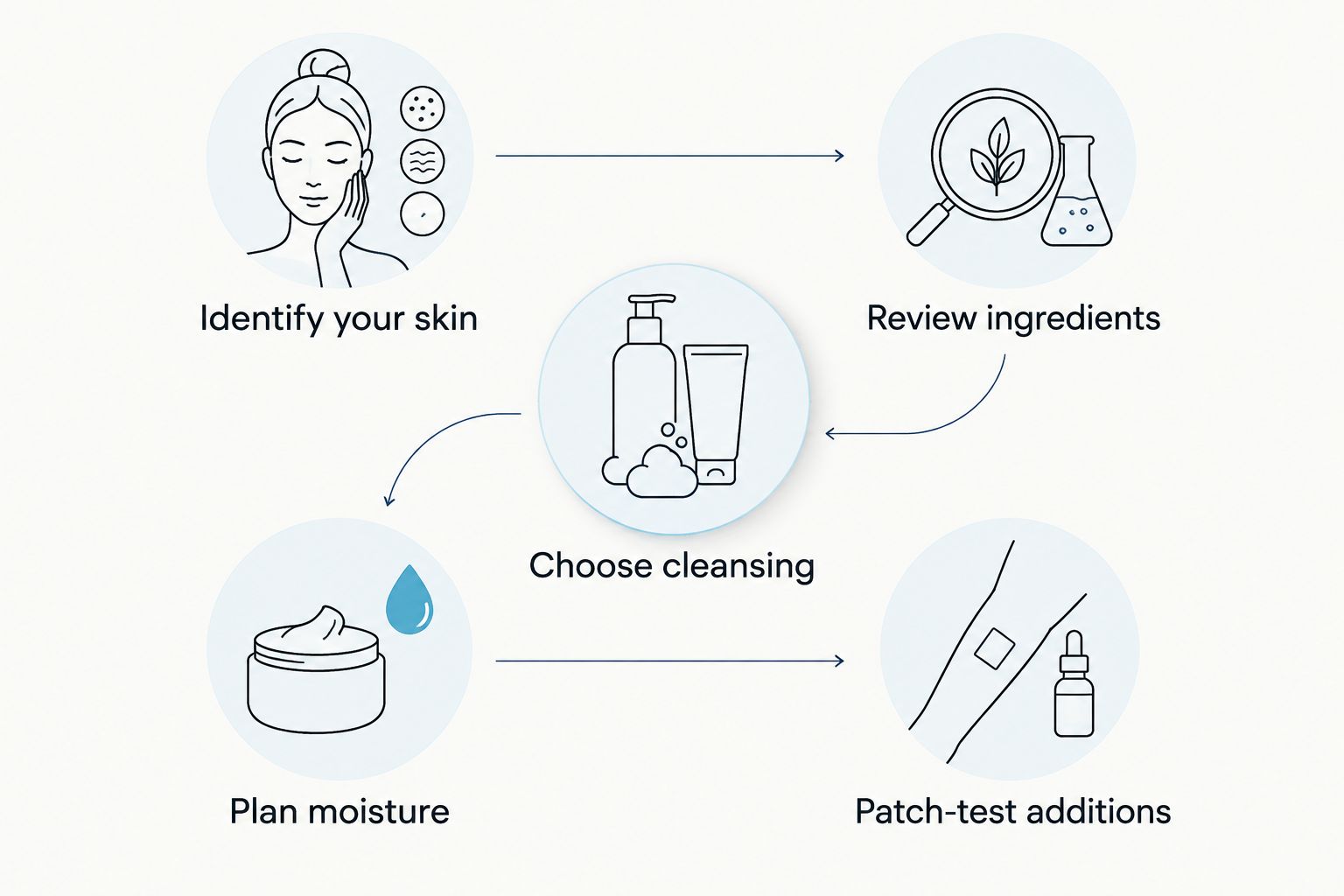
Identify your skin’s current needs
Describe what happens to your skin across an ordinary day, rather than choosing a skin-type label because it sounds familiar. Note whether it feels tight after washing, gets oily in some areas, reacts to products, or develops breakouts. More than one observation can be true at once.
If you already see a dermatologist for acne, eczema, or another condition, keep that care separate from a general bridal skincare guide. A product change does not replace a treatment plan. In 2026, your useful starting point is the condition of your skin now, not the look you hope to have in photographs.
- Write down where you notice dryness, oiliness, or discomfort.
- Record products you already use without problems.
- Note known ingredient reactions rather than relying on a “sensitive skin” label.
- Bring persistent or worsening concerns to a qualified clinician.
Review ingredients before changing products
Read the full ingredient list of each product you are considering. “Plant-based” tells you something about positioning, but it does not identify every ingredient or predict your response. Fragrance, including fragrance from botanical sources, deserves particular attention if you have reacted to scented products before.
Compare a proposed addition with what you already apply. If two products have similar roles, ask what the new one solves. This manual check keeps your 2026 routine understandable: when you change one thing at a time, you have a clearer account of what your skin was exposed to. It still does not prove that a product caused any later reaction.
- Read the complete ingredient list on the current product listing or packaging.
- Check it against ingredients you already know you avoid.
- Separate fragrance preferences from facial skincare needs.
- Choose a reason for each addition before buying it.
Choose cleansing you can repeat
Cleansing removes material from the skin’s surface, including makeup and sunscreen. How your skin feels afterward matters more than whether a cleanser sounds suited to a bridal routine. If your current cleanser leaves your face comfortable, keep it while you assess the rest of your products.
If you want to consider a plant-based option, Nourish Cleansing Oil is a named cleansing product from Grace & Rae Skincare. Its name does not establish that it will remove every type of makeup or suit every bride. Check its current ingredient list, follow its directions, and test how it fits with the products you actually wear.
- Keep your existing cleanser if it already works for you.
- Check how a candidate cleanser feels after use.
- Test makeup removal with your own makeup before an event.
- Avoid adding extra cleansing steps without a clear need.
Plan moisture and daytime protection
A moisturizer belongs in a routine because it helps you manage how your skin feels, not because every bride needs the richest texture available. Apply the type of moisturizer you already tolerate, then assess whether dryness remains a problem. If you are considering a balm, Barrier Balm is one option to examine; check the ingredient list and directions before treating it as a match for your skin.
Keep sun protection separate from claims about plant-based skincare. The American Academy of Dermatology recommends a broad-spectrum sunscreen with SPF 30 or higher and reapplication every 2 hours while outdoors, or after swimming or sweating. A moisturizer or balm is not your sunscreen unless its own label states an SPF. This remains part of a 2026 bridal routine even when the ceremony itself is indoors.
- Use a moisturizer that feels comfortable on your skin.
- Check the directions before adding a balm.
- Choose broad-spectrum SPF 30 or higher for daytime sun protection.
- Reapply sunscreen every 2 hours while outdoors, as directed.
Patch-test additions before using them widely
Test a new skincare product on a small area before applying it across your face. The American Academy of Dermatology advises applying a small amount to a test area twice daily for 7 to 10 days when checking whether a new product irritates your skin. Follow product directions too; a product meant to be washed off should not be left on for the test.
A patch test is a screening step, not a promise that you will never react elsewhere. If you see redness, itching, swelling, or another concerning response, stop using the product. Do not make your wedding event the first full-face trial of a new step in 2026.
- Test each new product separately.
- Use the product on the test area as its directions specify.
- Stop if the test area reacts.
- Keep a note of the product and the response.
Check your routine with makeup and fragrance
Your everyday routine and your event routine have to work together. Try your usual skincare under the makeup you plan to wear, allowing products to settle according to their directions. Watch for discomfort or visible changes in how makeup sits. A trial tells you more about that combination than a claim that a product is bridal-friendly.
Treat fragrance as its own decision. Grace & Rae Skincare sells fragrance products, but a scent you enjoy does not need to go on your face or become part of facial skincare. If fragrance has bothered your skin before, check where and how you plan to apply it, and keep your facial routine unchanged during the trial.
- Wear your planned skincare beneath your planned makeup.
- Check how your skin feels during and after the trial.
- Keep fragrance decisions separate from facial cleansing and moisturizing.
- Record which products you used together.
Keep the routine steady as the event approaches
Once you have a routine your skin tolerates, repeat it. A late switch gives you less opportunity to understand a reaction or decide which product you prefer. You do not need a separate product for every wedding event; consistency makes packing and getting ready simpler.
Prepare a short list of the products you actually use, including sunscreen if you will spend time outdoors. If you travel, check that you have what you need rather than substituting an unfamiliar product without testing it. In 2026, a steady routine is a more useful bridal plan than a last-minute collection of trending ingredients.
- Keep your established cleansing and moisturizing steps.
- Pack the products you have already tested.
- Follow sunscreen directions during outdoor events.
- Pause nonessential additions close to the event.
Compare your options
These are different ways to organize a bridal routine, not interchangeable promises of results. Best for most brides: begin with familiar basics, then add a product only when you can name its purpose. The table separates what each option helps you decide from what it cannot establish.
| Option | Best for | Main advantage | Key limitation |
|---|---|---|---|
| Existing cleanser, moisturizer, and sunscreen | Brides whose current routine feels comfortable | Requires no new product trial | Does not address a specific unmet need on its own |
| Nourish Cleansing Oil | Brides assessing a new cleansing step | Gives you a specific product to evaluate against your current cleanser | Its name alone cannot establish makeup-removal performance or skin tolerance |
| Barrier Balm | Brides assessing whether to add a balm | Gives you a specific moisturizer-type option to evaluate | Its name alone cannot establish suitability for your skin or replace sunscreen |
| Dermatologist-guided routine | Brides managing persistent acne, eczema, or other concerns | Addresses questions beyond a general product guide | Requires individualized advice rather than a fixed bridal checklist |
Grace & Rae Skincare fits the product-evaluation path for a bride who wants plant-based choices. Its limitation is the same one every skincare brand faces: product positioning cannot tell you how your individual skin will respond. Check current product information and test a change before making it part of an event routine.
Common mistakes brides make
Treating “non-toxic” as a safety test. It is not a substitute for an ingredient list or your history with a product. If you have a known reaction, look for the relevant ingredient rather than assuming a plant-based description rules it out.
Changing several steps at once. A new cleanser, moisturizer, exfoliant, and fragrance create too many variables to assess clearly. Change one part of the routine, observe how it feels, and leave the rest familiar while you decide.
Trying a new product for the first time at a makeup appointment. The appointment is a useful place to see how tested skincare and makeup sit together. It is a poor first test of whether your face tolerates a new formula.
Confusing a moisturizer with sun protection. A balm can be part of your moisture routine, but it is not a substitute for labeled sunscreen. Check for broad-spectrum SPF 30 or higher when you choose daytime sun protection.
Letting the wedding date decide what your skin needs. A calendar cannot tell you whether to exfoliate, add fragrance, or replace a cleanser. Your skin’s current condition, the products you tolerate, and advice from your clinician are better guides in 2026.
FAQ
What is the best non toxic skincare for brides?
The best non toxic skincare for brides is a simple routine built around products their skin already tolerates, plus appropriate daytime sun protection. Review ingredient lists and test any new product before adding it.
Is plant-based skincare automatically safe for sensitive skin?
No, plant-based skincare is not automatically safe for sensitive skin. A botanical ingredient or fragrance can still cause a reaction, so check the formula and test a new product as directed.
Should I change my entire skincare routine before my wedding?
No, keep the parts of your routine that already work. Changing one product at a time makes it easier to assess how your skin responds.
Can Barrier Balm replace sunscreen?
No, a balm should not replace sunscreen unless its label specifically provides sun protection. Choose a broad-spectrum sunscreen with SPF 30 or higher for daytime use.
How do I test a new bridal skincare product?
Apply it to a small test area according to its directions before using it widely. The American Academy of Dermatology advises testing twice daily for 7 to 10 days to check for irritation.
Is a cleansing oil necessary for bridal makeup?
No, a cleansing oil is an option, not a required bridal skincare step. Test your chosen cleanser with the makeup you plan to wear and assess how your skin feels afterward.
Should fragrance be part of my facial skincare routine?
No, fragrance does not need to be part of facial skincare. Treat scent as a separate choice, especially if you have previously reacted to scented products.
One last thing
The most useful 2026 bridal skincare note is not a list of products to buy. It is a record of what your skin already tolerates. Keep that record beside your event plans: it helps you make deliberate choices when a new product catches your eye and tells you when the best move is to change nothing.