


Best overall: Nourish Cleansing Oil for a dedicated cleansing step. Best for dry-feeling skin: Barrier Balm. Best for an exfoliation step: Renew Exfoliant. Nourish Cleansing Oil is the clearest starting point for Grace & Rae Skincare shoppers building a non toxic skincare routine in 2026—but the right choice depends on the step your routine is missing.
- Nourish Cleansing Oil is the best starting point for non toxic skincare when you need a cleansing step.
- Barrier Balm fits a comfort-focused routine for dry-feeling skin; it does not replace cleansing or sunscreen.
- Renew Exfoliant belongs in an exfoliation step, not in place of a daily cleanser.
- In 2026, check the full ingredient list: non toxic is not a substitute for knowing what your skin tolerates.
Why this matters
A label cannot tell you whether a product belongs in your routine. Grace & Rae Skincare offers plant-based skincare, but plant-based does not mean irritation-free, and non toxic does not identify a single ingredient standard. Start with the job you need done: cleanse, add a comfort-focused step, or exfoliate.
In 2026, a short routine you understand beats a shelf of products you cannot place in order. You also need to keep sun protection separate from this list: none of the three picks below is identified as sunscreen. Check each product's current ingredient list and directions before adding it to your routine.
What makes the best non toxic skincare product?
These criteria put usefulness ahead of a broad label:
- A clear role: You can tell where the product belongs without guessing what it replaces.
- A match for your priority: Dry-feeling skin, cleansing, and exfoliation call for different choices.
- An ingredient list you can check: Plant-based language alone cannot tell you whether your skin tolerates every ingredient.
- A manageable routine: You can introduce one new product at a time and notice how your skin responds.
- An honest limitation: A cleanser is not a balm, an exfoliant is not a daily cleanser, and none of these picks replaces sunscreen.
Those distinctions matter more than crowning one formula for every face. If you already have a cleanser you like, the best next purchase is not necessarily another cleanser. If your skin feels reactive, adding an exfoliation step simply because it appears on a best-of list misses your actual priority.
Best non toxic skincare products at a glance
| Product | Best for | Standout feature | |
|---|---|---|---|
| Nourish Cleansing Oil | A dedicated cleansing step | An oil cleanser with a clear place in the routine | |
| Barrier Balm | A comfort-focused step for dry-feeling skin | A balm format for the final skincare step | |
| Renew Exfoliant | Adding an exfoliation step | A product devoted to exfoliation |
The table compares roles, not unverified results. The available product names establish what type of step each item serves; they do not establish ingredient concentrations, suitability for every sensitive-skin concern, or how frequently you should use a particular formula. Read the current product directions for those details.
1. Nourish Cleansing Oil: best non toxic skincare starting point
Best for: someone building a routine around a dedicated cleansing step. Nourish Cleansing Oil has the most straightforward role of the three picks: it is a cleanser. For a new Grace & Rae Skincare customer who does not yet have a cleansing step, that makes it the clearest place to begin rather than adding a treatment before the basics are settled.
An oil cleanser is still a cleanser, not a complete skincare routine. Follow the product directions for use and removal, then decide what your skin needs after cleansing. If your current cleanser already suits you, there is no reason to replace it solely to make your routine sound more plant-focused.
Nourish Cleansing Oil pros:
- Its cleansing role is easy to distinguish from a balm or exfoliant.
- It gives you one product to assess before adding another new step.
- It fits a straightforward cleanse-first routine.
Nourish Cleansing Oil cons:
- It does not replace a product you use after cleansing for comfort.
- The product name cannot tell you whether every ingredient suits your skin.
- It is unnecessary as a first purchase if you already have a cleanser that works for you.
Nourish Cleansing Oil verdict: Buy if you need a cleansing step and want to start with one Grace & Rae Skincare product. Hold if cleansing is already covered; choose your next step based on the gap in your routine instead.
2. Barrier Balm: best for a comfort-focused step
Best for: someone whose routine calls for a balm after cleansing. Barrier Balm has a different job from the top pick. Its balm format makes it the more relevant option when your priority is a comfort-focused final step, particularly if your skin feels dry after your existing routine.
A name that includes barrier is not proof that a product repairs a diagnosed skin condition. Check the formula and directions, especially if you know particular ingredients bother your skin. For persistent irritation or a suspected skin condition, seek advice from a qualified clinician rather than relying on a product name for a diagnosis.
Barrier Balm pros:
- It serves a distinct role alongside a cleanser rather than duplicating the cleansing step.
- Its balm format gives shoppers seeking that texture a clear option.
- It lets you prioritize how your skin feels after cleansing instead of adding an exfoliant by default.
Barrier Balm cons:
- It does not remove the need for a cleanser.
- No stated sun-protection rating makes it a sunscreen substitute.
- A comfort-focused balm is not automatically the right texture for everyone.
Barrier Balm verdict: Buy if you already have a cleansing step and want to assess a balm for dry-feeling skin. Hold if you first need to establish a cleanser, or if you are looking specifically for sunscreen.
3. Renew Exfoliant: best for an exfoliation step
Best for: someone who already has a basic routine and wants to consider exfoliation. Renew Exfoliant fills the exfoliation slot. That makes it a more specific choice than Nourish Cleansing Oil or Barrier Balm, not a better all-purpose replacement for either one.
Exfoliation is a step to add deliberately. The product name does not identify its exfoliating method or tell you how often to use it, so read the current label before applying it. If your skin already feels uncomfortable, settle your basic routine before deciding whether another active step belongs in it.
Renew Exfoliant pros:
- Its purpose is distinct from cleansing and a balm-based final step.
- It suits shoppers who have identified exfoliation as the missing part of their routine.
- It makes the decision specific: you are choosing a step, not an entire collection.
Renew Exfoliant cons:
- It is not a substitute for daily cleansing.
- Its name alone does not establish a use schedule or sensitivity profile.
- It adds a decision to a routine that may not need another step.
Renew Exfoliant verdict: Hold until your cleansing and comfort steps are settled and you have checked its directions. Buy when exfoliation is the specific step you want to add and the current formula suits your needs.
How to fit the picks into your routine
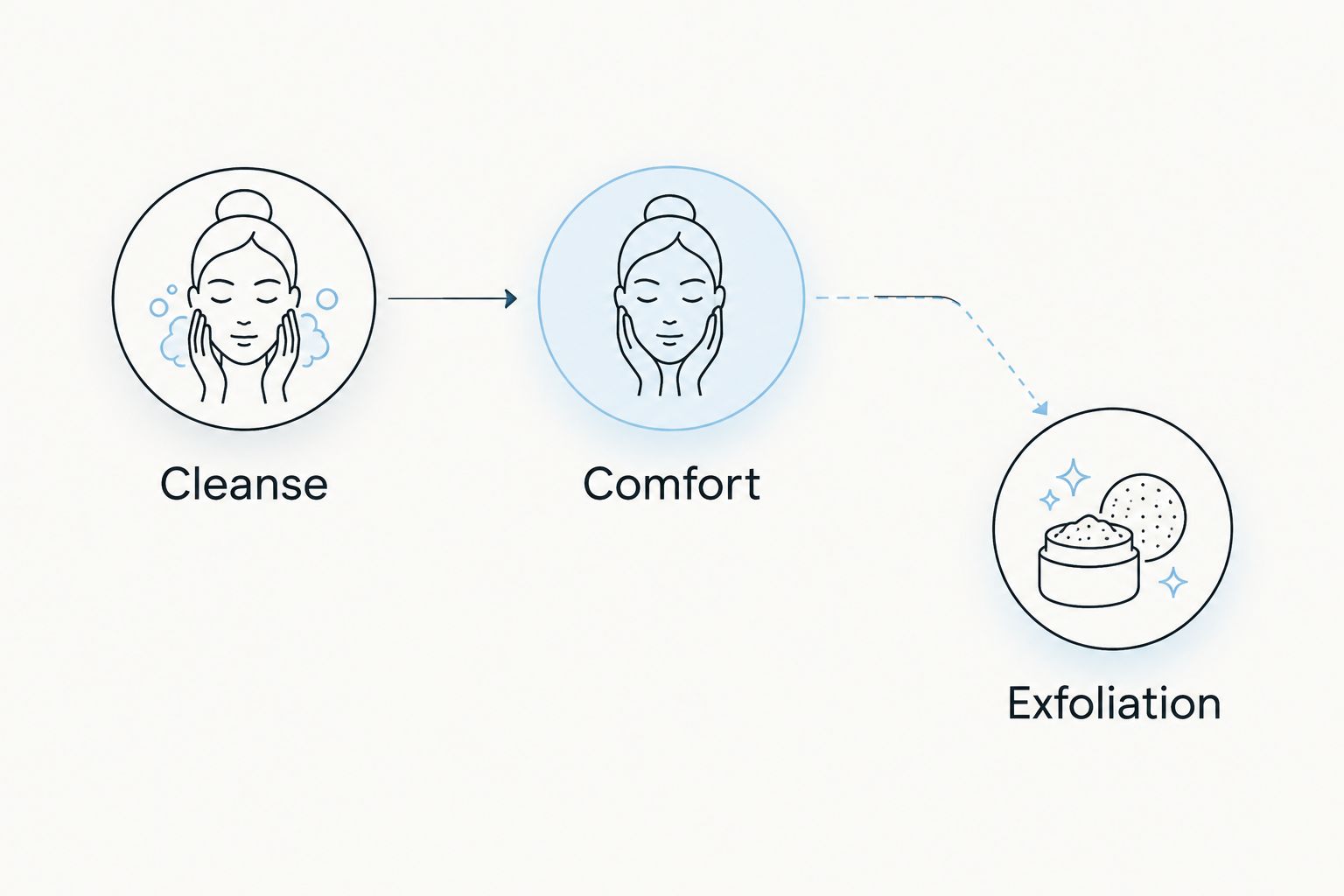
Think in roles rather than products you must own. Cleanse is the starting step; comfort addresses what you want from a post-cleansing product; exfoliation is a separate choice to consider once the basics make sense. You do not need all three to make a routine count.
Add one new product at a time so you can tell what agrees with your skin. For a product you have not used before, the American Academy of Dermatology advises testing it on a small area twice daily for 7 to 10 days before using it more widely. That check matters even when the packaging uses plant-based or non toxic language.
Do not leave sunscreen out because the rest of your routine feels intentional. The American Academy of Dermatology recommends a broad-spectrum sunscreen with SPF 30 or higher and reapplication at least every 2 hours while outdoors. Those are sunscreen guidelines, not claims about any product in this ranking.
How these products were ranked
The order follows the criteria above: a clear role first, a useful starting point second, and limitations stated plainly. Nourish Cleansing Oil leads because cleansing is an easy step to identify and assess on its own. Barrier Balm follows for shoppers focused on a post-cleansing balm; Renew Exfoliant comes third because exfoliation is a more particular addition.
This is a decision guide, not a claim that one formula has outperformed another in a clinical comparison. No ingredient panel, performance study, or sensitive-skin test result was supplied for these products. In 2026, use the ranking to narrow your choice, then check the current product information against your own ingredient concerns.
Which non toxic skincare product should you choose?
Choose Nourish Cleansing Oil if you are undecided and need a cleanser. That is the default in this 2026 guide because its role is immediate and distinct. Choose Barrier Balm instead when cleansing is covered and your priority is a balm for dry-feeling skin. Choose Renew Exfoliant only when you have decided that exfoliation belongs in your routine.
Grace & Rae Skincare is best approached one step at a time: identify what you want a product to do, read its current ingredient list, and follow its directions. For non toxic skincare, that is a more useful decision than treating the words on the front of a label as a guarantee of compatibility.
FAQ
What is the best non toxic skincare product to start with in 2026?
Nourish Cleansing Oil is the best starting point here if you need a dedicated cleanser. If you already have a cleanser that suits your skin, choose a different step rather than replacing it automatically.
Is plant-based skincare always safe for sensitive skin?
No, plant-based does not mean every ingredient suits sensitive skin. Check the full ingredient list and test a new product before using it more widely.
Is Barrier Balm better than Nourish Cleansing Oil?
Neither is better for the same job: Barrier Balm is a balm, while Nourish Cleansing Oil is a cleanser. Choose according to the step your routine is missing.
Do I need Renew Exfoliant in a basic routine?
No, exfoliation is a separate choice, not a requirement for starting a basic routine. Establish your cleansing and post-cleansing steps first, then read Renew Exfoliant's directions if you want to add it.
Does non toxic skincare mean fragrance-free?
No, non toxic does not establish whether a product contains fragrance. Read the current ingredient list if fragrance is an ingredient you need to assess.
Can Barrier Balm replace sunscreen?
No stated sun-protection rating identifies Barrier Balm as sunscreen. For outdoor sun protection, choose a broad-spectrum sunscreen with SPF 30 or higher and follow its reapplication directions.
How do I test a new skincare product?
Test the product on a small area before using it more widely. The American Academy of Dermatology advises applying it to that area twice daily for 7 to 10 days and watching for a reaction.
One last thing
In 2026, the most useful question is not which product has the cleanest-sounding name. It is which step you can clearly explain and assess on your own skin. If dryness is the concern that brought you here, read the guide to barrier balms before choosing a balm; if cleansing is the gap, start there instead.
Related guides
- Explore The Collection for another way to assess which skincare steps you want together.