
There's a moment every fall when you wash your face and it suddenly feels tight. The furnace kicks on, the air outside turns crisp, and the routine that worked all summer stops working.
That isn't your imagination. Your skin is responding to a real change in its environment, and your skincare routine needs to change with it.
The good news? A winter-ready routine doesn't mean more products or more steps. Here in the Midwest, where winters are long and the air is bone dry, I've found the best results come from a few simple habits done consistently, and done with care.
In this guide, you'll learn why skin changes between fall and winter, the seven habits I recommend for 2026, and how to build a simple evening ritual that keeps your skin soft, calm and glowing until spring.
Why your skin changes from fall to winter
Your skin barrier is the outermost layer of your skin. Its job is to hold moisture in and keep irritants out. When the seasons shift, three things put that barrier under pressure at once:
- Lower humidity outdoors. Cold air holds less moisture, so water evaporates from your skin faster.
- Dry indoor heat. Furnaces and fireplaces pull even more moisture out of the air inside your home. The American Academy of Dermatology notes that this dry heat can leave skin dry and irritated, and can make fine lines more noticeable.
- Hotter, longer showers. They feel wonderful on a cold morning, but hot water strips away the natural oils your barrier depends on.
The result is what so many women describe to me in late October: tightness after cleansing, flaky patches around the nose and mouth, a dull complexion, and redness that wasn't there in August.
If this sounds familiar, you may also enjoy our guide to why your skin barrier struggles in summer. The barrier is under stress in every season, just for different reasons.
7 winter skincare habits for 2026
The biggest skincare shift heading into 2026 isn't a new miracle ingredient. It's a move away from 10-step routines and toward fewer, better products that protect the skin barrier. These seven habits put that approach into practice.
1. Put your barrier first
In summer, many of us reach for exfoliants and strong actives. In winter, your skin needs protection more than correction. Make every step of your routine about keeping moisture in.
Our best-selling Barrier Balm was made for exactly this. It blends shea and kokum butters with argan, jojoba and blueberry seed oils to soften dry patches and seal in everything you apply before it. Customers living in dry climates tell us it's the one product they won't go without in winter.
2. Swap foaming cleansers for an oil cleanser
If your face feels squeaky or tight after washing, your cleanser is too harsh for this season. Dermatologists recommend a gentle cleanser that removes dirt and oil without a thick lather.
Our Nourish Cleansing Oil melts away makeup and SPF using sunflower, pumpkin seed and apricot kernel oils, then rinses clean with water. Your skin feels clean, but never stripped.
3. Apply your skincare to damp skin
This is the simplest habit on the list, and one of the most effective. The AAD advises applying moisturizer while skin is still damp after washing, which helps trap water in the skin.
After cleansing, press a few sprays of Evoke Essence into your palms and onto your face. It's made with aloe, green tea, Kakadu plum and hyaluronic acid to give skin a drink of hydration before your serum.
4. Layer, then seal
Think of winter skincare in two layers: water-based hydration first, then richer oils and butters on top to lock it in. The AAD notes that creams and ointments add more moisture than lightweight lotions.
Follow your essence with 1–2 drops of Repair Serum, pressed into damp skin, then finish with a pea-sized amount of Barrier Balm. Repair Serum combines aloe, Kakadu plum, licorice root and carrot seed to calm and brighten winter-dulled skin.
5. Exfoliate less
Winter skin is already working hard to hold onto moisture, so over-exfoliating can leave it raw and reactive. Cut back to once or twice a week, and skip it entirely on days your skin feels tight or irritated.
6. Take shorter, warmer showers and care for your body too
The AAD recommends keeping showers to 5–10 minutes in warm (not hot) water, patting skin dry, and moisturizing right away. Your body loses moisture in winter just like your face.
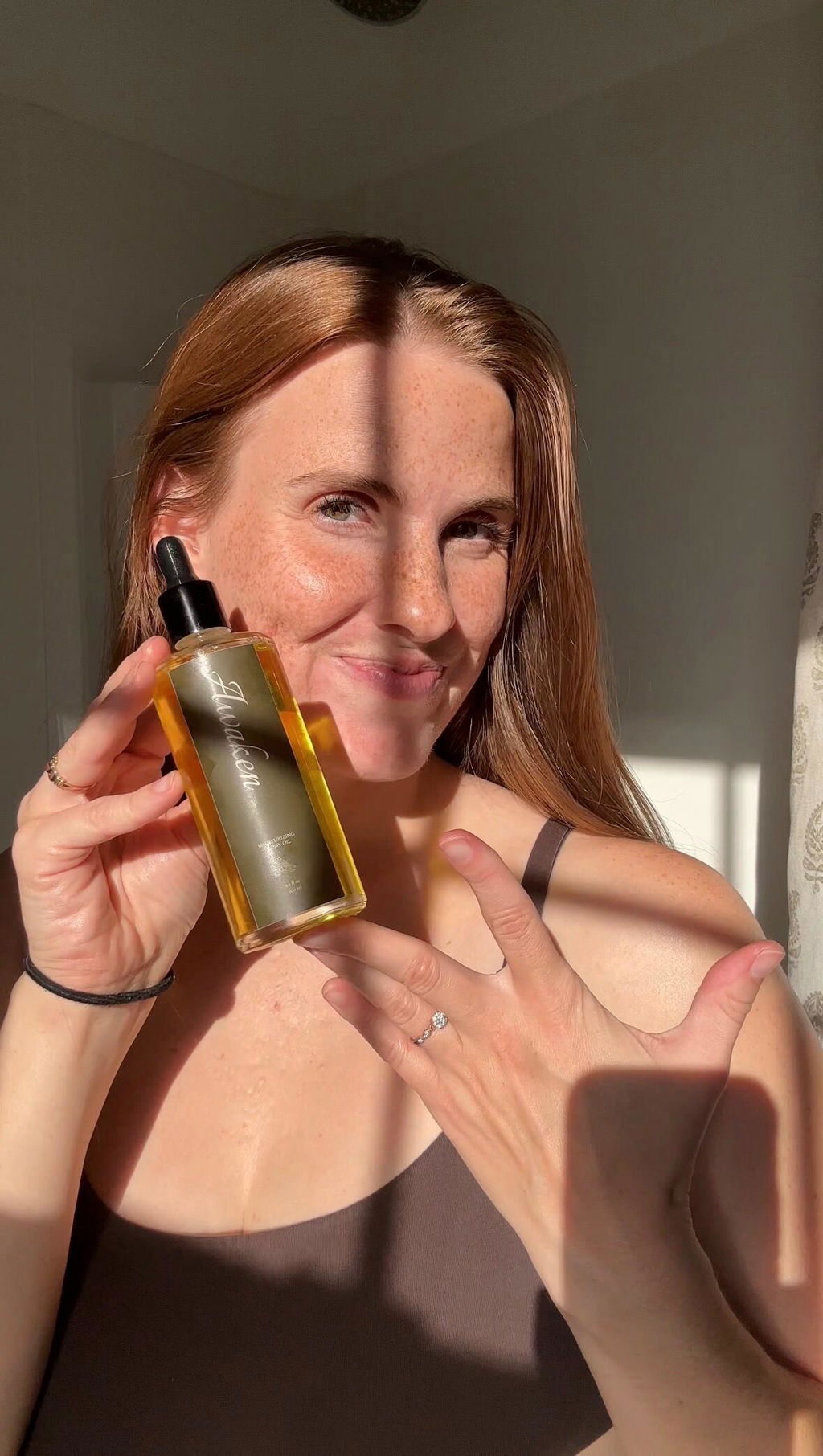
Smooth our Awaken Body Oil, made with jojoba, grapeseed and vitamin E, onto damp skin straight out of the shower.
7. Protect your skin every day, even on gray days
UV rays don't take the winter off, and snow can reflect sunlight back onto your skin. Dermatologists recommend a broad-spectrum sunscreen with SPF 30 or higher year-round. Apply it as the final step of your morning routine.
Two more habits worth adding: run a humidifier in your bedroom overnight, and wear gloves outdoors to protect your hands from cold, dry air.
Your fall-to-winter evening ritual, in 6 minutes or less
Here's how all of these habits come together in one calm evening routine. Dim the lights, leave your phone in another room, and take three slow breaths before you begin.
- Cleanse. Massage 2 pumps of Nourish Cleansing Oil onto dry skin for 60 seconds, then rinse with warm water.
- Hydrate. While your skin is still damp, shake Evoke Essence into your palms and press it into your face.
- Treat. Warm 1–2 drops of Repair Serum between your fingertips and press gently onto your face and neck.
- Seal. Melt a pea-sized amount of Barrier Balm between your palms and press it over your skin as the final step.
All four products come together in our Radiance Ritual Collection, made for dry and mature skin. It's $160 and saves you $28 compared to buying each product on its own.
If you prefer a shorter routine, the Pure Harmony Collection ($125) pairs the cleansing oil, serum and balm in three simple steps.
Most customers notice softer, more hydrated skin within 5–7 days. For the best results, give your new ritual a full 30 days of consistent use.
Ready to build your winter ritual? Shop the Radiance Ritual Collection or take our skin quiz to find the right routine for your skin.
Winter skincare FAQ
How do I transition my skincare routine from fall to winter? Switch to a gentler, non-foaming cleanser, apply products to damp skin, add a richer final layer such as a balm, and exfoliate less often. Keep using sunscreen every morning.
Why is my skin so dry in winter? Cold outdoor air and indoor heating both lower humidity, so moisture evaporates from your skin faster. Hot showers and harsh cleansers make it worse by stripping your skin's natural oils.
Should I use a face oil or a balm in winter? Many women do best with both: a lightweight serum or oil for nourishment, then a balm on top to seal in moisture. Balms are especially helpful for very dry, mature or sensitive skin.
Do I need sunscreen in winter? Yes. UV rays reach your skin year-round, even on cloudy days, and snow reflects sunlight. Use a broad-spectrum SPF 30 or higher every morning.
How often should I exfoliate in winter? Once or twice a week is enough for most skin types. If your skin feels tight, red or stings when you apply products, pause exfoliating until it recovers.
When should I see a dermatologist about dry skin? If your skin stays very dry, cracked, itchy or painful after a few weeks of gentle care, see a board-certified dermatologist. Persistent dryness can be a sign of a condition like eczema that needs treatment.