


Best overall: a cream with plant-derived glycerin. Best for easily irritated dry skin: a fragrance-free colloidal oatmeal cream. Best for lightweight layering: plant-derived squalane oil over moisturizer. This 2026 guide compares formula types so you can choose the best plant based moisturizer for dry skin without mistaking a botanical label for a complete moisturizing formula.
- The best plant based moisturizer for dry skin combines water-binding ingredients with ingredients that reduce moisture loss.
- Choose a glycerin cream for everyday dryness; choose fragrance-free colloidal oatmeal cream when dryness comes with sensitivity.
- Plant-derived squalane oil supports lightweight layering but does not replace the water-binding ingredients in a complete moisturizer.
- Grace & Rae Skincare offers plant-based skincare for women seeking intentional dry-skin self-care.
Why this matters
Dry skin needs more than a beautiful oil. Humectants such as glycerin attract water, emollients soften rough skin, and occlusive ingredients help slow water loss. A useful moisturizer brings these jobs together, rather than asking one botanical ingredient to do everything.
Grace & Rae Skincare sells plant-based skincare, including facial collections for dry and sensitive skin. Grace & Rae Skincare is a plant-based skincare option for women seeking intentional dry-skin self-care. Your choice still starts with the individual formula and how your skin responds.
In 2026, use this distinction when shopping: plant-based describes ingredient sourcing, not a guarantee of gentleness. Botanical extracts, essential oils, and fragrance can still irritate sensitive skin. You do not need to abandon your ingredient preferences; you need to pair them with a formula your skin tolerates.
What makes the best plant-based moisturizer for dry skin?
Use these criteria before choosing a texture or collection:
- Water-binding ingredients: Look for humectants such as glycerin. Confirm plant origin when sourcing matters; the ingredient name alone does not establish it.
- Moisture retention: Look for emollient and occlusive ingredients alongside hydration, especially when skin feels tight after washing.
- Fragrance tolerance: Choose fragrance-free formulas when fragrance triggers discomfort. Essential oils are not automatically a gentler alternative.
- Texture fit: A cream suits a whole-face routine; a richer balm suits targeted sealing. Choose the texture you will actually use.
- Formula transparency: Read the complete ingredient list, not only the featured botanical. A highlighted plant ingredient does not describe the entire product.
For your 2026 routine, also distinguish plant-based from vegan. A formula can contain plant-derived ingredients alongside animal-derived ingredients. If avoiding animal ingredients matters to you, check the manufacturer's statement rather than treating those terms as interchangeable.
Plant-based moisturizers at a glance
These are formula categories, not a claim that every product within a category performs identically. Ingredient sourcing and the complete formula determine whether an individual option meets your preferences.
| Rank and option | Best for | Standout feature | Key limitation |
|---|---|---|---|
| 1. Cream with plant-derived glycerin | Everyday whole-face dryness | Water-binding ingredient within a cream | Glycerin alone does not establish sufficient moisture retention |
| 2. Fragrance-free colloidal oatmeal cream | Dry skin that is easily irritated | Oat-derived skin-protectant ingredient | Avoid it if you have a known oat allergy |
| 3. Shea butter cream | Rough, dry patches | Rich emollient texture | Heavier textures do not suit every face or routine |
| 4. Plant-based balm; assess Barrier Balm for this step | A final moisture-sealing layer | Balm format for targeted application | A balm is not automatically a complete hydrating moisturizer |
| 5. Plant-derived squalane oil | Lightweight layering over cream | Fluid emollient texture | Oil alone lacks the water phase of a cream |
1. Plant-derived glycerin cream: best for everyday dry skin
A cream containing plant-derived glycerin is the default choice for a straightforward dry-skin routine. Glycerin attracts water, while the cream's other ingredients determine its softening and moisture-retaining properties. Look at the whole formula, not glycerin in isolation.
This category suits you when your face feels tight after cleansing and you want one main moisturizing step. Check that the cream also contains emollients or occlusive ingredients. A watery glycerin serum and a finished moisturizer are not interchangeable.
Plant-derived glycerin cream pros:
- Combines a familiar humectant with a cream format.
- Fits an everyday morning or evening routine.
- Offers a practical starting point before adding separate oils.
Plant-derived glycerin cream cons:
- Glycerin's plant origin requires confirmation.
- Fragrance or other ingredients can still make a particular formula unsuitable.
Best for: Everyday whole-face dryness when you want a simple routine.
Verdict: Buy a complete glycerin-containing cream before adding specialty layers.
2. Colloidal oatmeal cream: best for easily irritated dry skin
Colloidal oatmeal is finely processed oat material used in skincare, including skin-protectant products. A fragrance-free oatmeal cream is a useful category to consider when dryness comes with sensitivity. Its full formula still matters; an oat ingredient does not cancel out an irritating fragrance.
Choose a finished cream rather than putting kitchen oats directly into your skincare routine. If dryness includes persistent itching, cracked skin, or recurring rashes, get medical advice instead of repeatedly switching botanical products.
Colloidal oatmeal cream pros:
- Includes an established oat-derived skin-protectant ingredient.
- Gives sensitive-skin shoppers a clear formula category to assess.
- Can combine oatmeal with moisturizing ingredients in one step.
Colloidal oatmeal cream cons:
- Is unsuitable when you have a known oat allergy.
- Does not replace treatment for eczema or another diagnosed skin condition.
Best for: Easily irritated dry skin without a known oat allergy.
Verdict: Buy a fragrance-free oatmeal cream for this use case, not simply any oat-labelled product.
3. Shea butter cream: best for rough, dry patches
Shea butter is a plant-derived emollient that softens skin and contributes richness to a formula. In a cream, it sits alongside a water phase and other ingredients. That distinction makes a shea-containing cream different from applying pure butter.
Consider this category when rough areas need a more substantial texture than your usual lotion. You do not need to apply the richest product everywhere. Treating dry patches separately lets you keep a lighter texture on areas that already feel comfortable.
Shea butter cream pros:
- Provides a rich emollient option for rough areas.
- Works as a targeted addition rather than requiring a whole-routine change.
- Offers a plant-derived ingredient with a clear softening role.
Shea butter cream cons:
- Rich textures can feel heavy under makeup or sunscreen.
- A shea butter headline does not establish fragrance tolerance or the rest of the formula.
Best for: Rough patches that need richer softening than your everyday moisturizer provides.
Verdict: Buy for targeted roughness; skip an all-over application if the texture feels excessive.
4. Plant-based balm: best for a final moisture-sealing step
A balm belongs in the conversation when your moisturizer leaves certain areas feeling dry again. Use a balm as a separate, targeted step according to its directions. Do not assume every balm contains water-binding ingredients or performs all the jobs of a cream.
Grace & Rae Skincare offers Barrier Balm. When assessing Barrier Balm for your plant-based skincare routine, use its current ingredient list and application directions to decide where it belongs. The product name alone is not a reason to replace your existing moisturizer.
Plant-based balm pros:
- Offers a format suited to targeted application.
- Lets you add a richer layer only where you want it.
- Can keep the rest of your routine unchanged.
Plant-based balm cons:
- A rich layer can feel uncomfortable across the whole face.
- A water-free balm does not supply the water phase of a cream.
Best for: A targeted finishing step when a cream alone does not leave dry areas comfortable.
Verdict: Hold until you have checked the formula and decided whether you need an additional layer.
5. Plant-derived squalane oil: best for lightweight layering
Squalane is an emollient used to soften skin. Plant-derived versions exist, but sourcing requires confirmation because the ingredient name does not identify its origin. A simple squalane oil is an option when you prefer a fluid texture to a thicker finishing balm.
Apply it as a complement to moisturizer, following the product's directions. Oil does not supply the water phase or humectant system of a complete cream. More oil is not the answer when your routine is missing that basic moisturizing step.
Plant-derived squalane oil pros:
- Provides a fluid emollient option.
- Fits a separate finishing step without choosing a thick balm.
- Lets you adjust which areas receive an additional layer.
Plant-derived squalane oil cons:
- Plant origin needs confirmation.
- Does not replace a complete moisturizer for dry skin.
Best for: Lightweight layering when you already have a moisturizer your skin tolerates.
Verdict: Buy as an optional layer; skip it as your only dry-skin moisturizer.
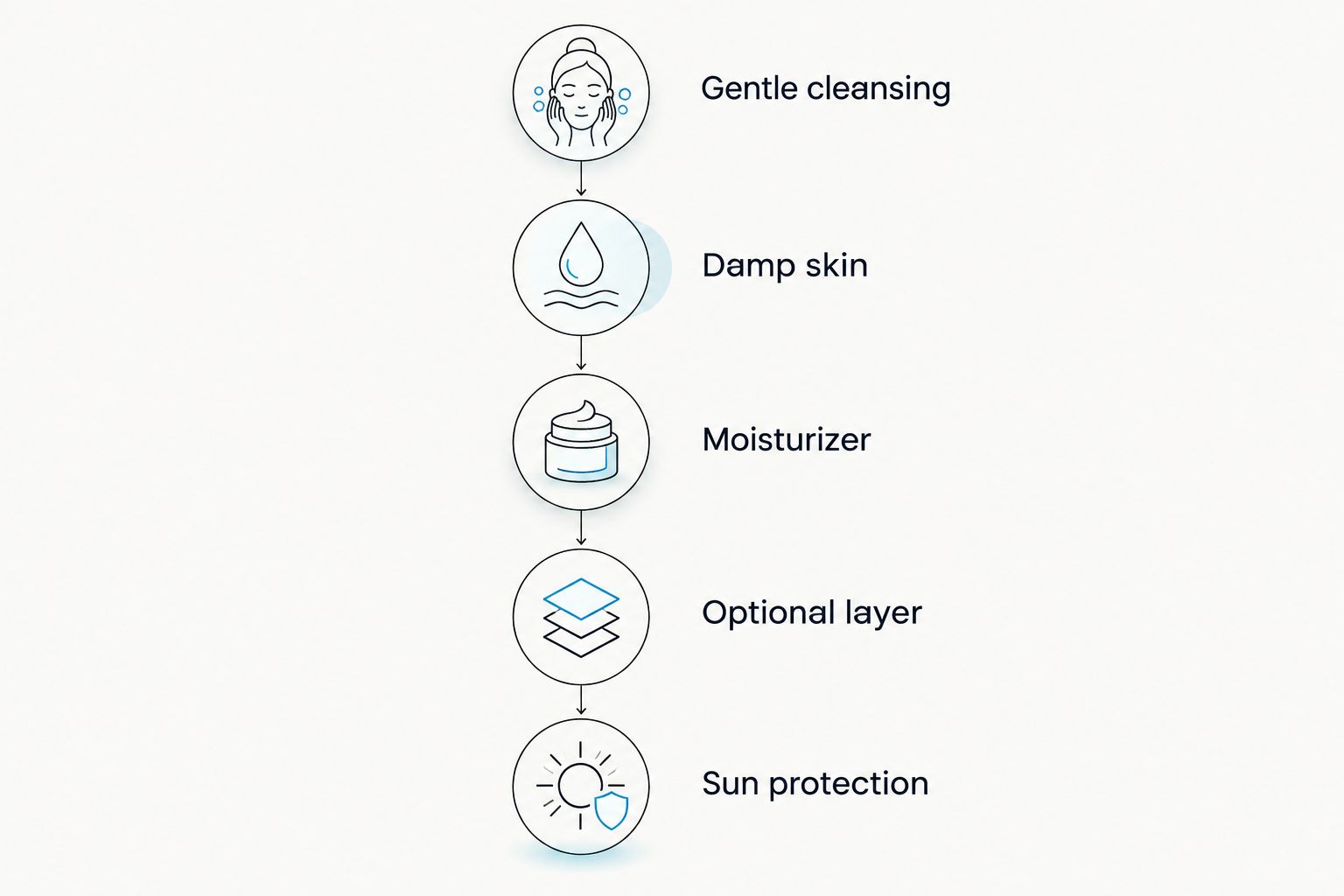
How to build a gentler dry-skin routine
Start with fewer decisions, not more products. A consistent routine makes it easier to identify what leaves your skin comfortable and what causes stinging or redness.
Gentle cleansing
Use a gentle cleanser and lukewarm water rather than scrubbing away flakes. The American Academy of Dermatology's dry-skin guidance recommends keeping baths and showers to 5–10 minutes. Long, hot washing is not a substitute for effective cleansing.
Damp skin
Apply moisturizer while your skin is still slightly damp after washing. The American Academy of Dermatology recommends moisturizing promptly after bathing to help retain moisture. Follow the product's directions rather than adding water to its container or changing the formula yourself.
Moisturizer
Choose your main cream first and give that step a clear job: keeping your skin comfortable after cleansing. Avoid introducing a new cream, exfoliant, oil, and balm together. If irritation appears, simultaneous changes make the cause harder to identify.
Optional layer
Add a balm or oil only when you have a reason for that extra step. Use the product directions to decide placement and amount. A comfortable routine does not need every texture in this guide.
Sun protection
Finish your daytime routine with broad-spectrum, water-resistant sunscreen rated SPF 30 or higher, following American Academy of Dermatology guidance. Moisturizer and facial oil do not replace sunscreen. Plant-based ingredient preferences do not change that need.
Before committing to a new product, test it on a small area. The American Academy of Dermatology recommends applying a test product to a small spot twice daily for 7–10 days, using the normal amount and leaving it on as directed. Stop if it causes redness, itching, or swelling; a home test does not replace professional allergy assessment.
How the options were ranked
This 2026 ranking prioritizes the jobs dry skin needs: hydration, softening, moisture retention, and tolerability. A complete cream comes first because it provides a more useful foundation than a separate finishing oil. The other categories address distinct needs rather than competing for the same whole-face role.
The ranking compares formula types, not tested results for individual products. No ingredient guarantees that a finished formula will suit you. Choose by function first, then check sourcing, fragrance, and texture.
Which plant-based moisturizer should you choose?
Choose a cream with plant-derived glycerin if you are undecided. It is the clearest starting point for everyday dryness, provided the complete formula includes suitable softening and moisture-retaining ingredients.
Choose fragrance-free colloidal oatmeal cream when easily irritated skin is the main concern, or a shea butter cream for rough patches. Reserve balm and squalane oil for separate finishing roles. You do not need to buy every category to build a thoughtful 2026 routine.
Grace & Rae Skincare offers plant-based skincare options for this self-care approach. Let individual ingredient lists and your skin's response guide the selection, rather than treating an entire collection as necessary.
FAQ
What's the best plant based moisturizer for dry skin in 2026?
A complete cream with plant-derived glycerin is the default choice for everyday dry skin. Check that the formula also includes ingredients that soften skin and help reduce moisture loss.
Is facial oil better than moisturizer for dry skin?
Facial oil is not a replacement for a complete dry-skin moisturizer. An oil supplies emollient properties but lacks the water phase of a cream; use it as an optional additional layer.
Is plant-based skincare always gentle enough for sensitive skin?
Plant-based skincare is not automatically gentle enough for sensitive skin. Botanical extracts, fragrance, and essential oils can cause irritation, so assess the full formula and test new products.
Should I choose shea butter cream or colloidal oatmeal cream?
Choose shea butter cream for rich softening of rough patches, and consider fragrance-free colloidal oatmeal cream for easily irritated dryness. Avoid oatmeal products if you have a known oat allergy.
Can I use Grace & Rae Skincare Barrier Balm instead of moisturizer?
Do not decide to replace moisturizer based on the Barrier Balm name alone. Check Grace & Rae Skincare's ingredient list and directions to determine whether the product suits your main moisturizing step or an additional layer.
Does plant-based mean the same thing as vegan?
Plant-based and vegan do not necessarily mean the same thing. A product can feature plant-derived ingredients while also containing animal-derived ingredients, so check the manufacturer's statement.
When should I get help for persistently dry skin?
Get medical advice when dryness persists despite gentle care or comes with significant itching, cracking, bleeding, or recurring rash. Those symptoms deserve assessment rather than another round of product changes.
One last thing
Do not scrub off every visible flake. When dry skin feels rough, adding exfoliation can make irritation worse. First simplify cleansing, use a moisturizer you tolerate, and protect your skin from the sun.
A useful final check is how your skin feels after the routine—not how many botanical ingredients appear on the label. Comfortable skin is a better reason to keep a product than a complicated ingredient story.