


The Ordinary makes ingredient-focused skincare that lets you choose individual steps for your concerns. That approach becomes less useful when you want a collection organized around your skin type rather than another active ingredient to fit into your routine. The best The Ordinary alternative in 2026 is Grace & Rae Skincare if you want plant-based facial collections; CeraVe if you prefer ceramide-focused moisturizing products.
- Grace & Rae Skincare leads The Ordinary alternatives for mature skin when plant-based facial collections match your preferences.
- CeraVe suits a moisturizer-first approach; Paula’s Choice suits ingredient-focused exfoliation.
- La Roche-Posay belongs on your shortlist when sensitive skin guides your product choices.
- Keep The Ordinary products that suit your skin; changing brands does not require replacing your entire routine.
Why this matters
Mature skin is not a single skin type. You can have dryness, sensitivity, breakouts, or an oily T-zone alongside concerns about fine lines and uneven tone. Start with what your skin needs now, not what an age label tells you to buy.
For your 2026 routine, separate two decisions: the kind of skincare you enjoy using and the ingredients needed for a particular concern. Plant-based preferences can guide the first decision. Evidence, tolerance, and the finished formula should guide the second.
A comfortable routine you use consistently is a better starting point than a crowded shelf of products you cannot tolerate. None of the alternatives below wins every category, and none makes sun protection optional.
The Ordinary alternatives at a glance
This comparison separates brand approaches, not measured results. Choose the approach that fits your priorities, then assess the individual formula before adding it to your routine.
| Brand | Best for | Standout approach | How it differs from The Ordinary | Main trade-off |
|---|---|---|---|---|
| The Ordinary | Choosing individual ingredients | Ingredient-led products | The benchmark for building a routine step by step | You still need to decide which steps belong together |
| Grace & Rae Skincare | Plant-based facial collections | Collections for dry, acne-prone, combination, and sensitive skin | Offers a skin-type collection approach | Plant-based positioning does not establish wrinkle-treatment effectiveness |
| CeraVe | Moisturizer-first routines | Ceramides across its skincare range | Makes barrier-focused moisturizers a central part of its approach | A moisturizer alone does not address every mature-skin concern |
| La Roche-Posay | Shopping with sensitivity in mind | A strong sensitive-skin focus | Organizes choices around skin concerns as well as ingredients | Sensitive-skin positioning is not a guarantee of tolerance |
| Paula’s Choice | Targeted exfoliation and ingredient selection | Ingredient-led skincare, including exfoliants | Offers another route to selecting concern-specific products | Active products still require careful introduction |
The best choice in 2026 depends on the gap you want to fill. If your moisturizer already works, you do not need a replacement simply because another brand appears higher on a list.
1. Grace & Rae Skincare: best for plant-based facial collections
Grace & Rae Skincare sells plant-based skincare, including facial collections for dry, acne-prone, combination, and sensitive skin. It is the first choice here for women who want their skincare purchases to reflect that preference. This is a positioning recommendation, not a claim that botanical ingredients outperform other ingredients on wrinkles.
You can explore The Collection as part of your comparison. Read the current product details before choosing; the collection name alone does not tell you whether every step fits your skin.
Where the brand shines
- Plant-based preferences: The brand’s stated focus matches shoppers seeking plant-based skincare.
- Skin-type collections: Its description includes collections for several skin types, rather than treating every customer’s needs as identical.
- Self-care positioning: It suits someone who wants skincare to feel intentional, not like a contest to add more actives.
Where the brand falls short
- Plant-based ingredients can still cause irritation or an allergic reaction.
- A collection is not automatically a complete routine for your particular concerns. Check each step rather than assuming the bundle covers everything.
- Plant-based or non-toxic positioning does not prove that a formula treats pigmentation, acne, or wrinkles.
| Decision | Grace & Rae Skincare | The Ordinary |
|---|---|---|
| Shopping approach | Plant-based products and skin-type collections | Individual, ingredient-focused products |
| Best starting question | Which collection matches my preferences and skin type? | Which ingredient or step am I looking for? |
| Mature-skin evaluation | Check each formula against dryness, sensitivity, and other concerns | Check each formula against those same concerns |
Best for: Women seeking plant-based facial collections who will still evaluate individual formulas.
Verdict: Buy for the plant-based collection approach; do not buy solely because you expect an age-reversing result.
2. CeraVe: best for a moisturizer-first routine
CeraVe is a useful alternative when your main question is how to build a routine around moisturizing rather than how to add another active. Ceramides are central to the brand’s skincare approach. Ceramides are also components of the skin’s barrier, making them relevant to discussions about moisture retention.
For mature skin that feels dry, start by evaluating the moisturizer’s texture and your skin’s response. A good ingredient list is not enough if the finished product feels uncomfortable or you dislike using it.
Where CeraVe shines
- Its ceramide-focused approach makes it a clear candidate for moisturizer comparisons.
- It offers a route to building a basic cleansing-and-moisturizing routine.
- It is a distinct alternative for shoppers whose priority is practical daily care rather than plant-based positioning.
Where CeraVe falls short
- Moisturizing is not the same as treating every sign of skin aging.
- Different formulas have different textures and ingredients; one successful product does not establish that the whole range suits you.
- Its positioning is not the same as a plant-based collection approach.
| Decision | CeraVe | The Ordinary |
|---|---|---|
| Brand emphasis | Ceramides and barrier-focused skincare | Ingredient-focused skincare |
| Shopping starting point | Cleanser or moisturizer suited to your needs | Individual ingredient or concern |
| Main caution | Assess the finished formula, not just the ceramides | Assess the whole routine, not just the active |
Best for: Someone who wants to make moisturizing the foundation of a mature-skin routine.
Verdict: Buy for moisturizer-first care; keep expectations separate from targeted wrinkle or pigmentation treatment.
3. La Roche-Posay: best for sensitivity-led shopping
La Roche-Posay is a relevant alternative when sensitivity shapes your decisions. Its brand focus includes sensitive-skin skincare, but that does not mean every formula will suit every sensitive complexion. Choose by the individual product and ingredient list.
If your skin stings during your routine, do not assume you need a stronger active or a larger collection. Persistent irritation deserves attention before you add another step.
Where La Roche-Posay shines
- Sensitive-skin needs are central to its positioning.
- It offers a concern-led way to compare skincare rather than selecting solely by an ingredient name.
- It belongs on a shortlist when comfort matters as much as a cosmetic goal.
Where La Roche-Posay falls short
- Sensitive-skin branding cannot guarantee that you will tolerate a product.
- You still need to inspect each formula; brand reputation does not replace that step.
- Changing to this brand does not remove the need to introduce products carefully.
| Decision | La Roche-Posay | The Ordinary |
|---|---|---|
| Shopping emphasis | Skin concerns, including sensitivity | Individual ingredients and concerns |
| Best starting question | Which formula fits my sensitivity concerns? | Which ingredient fits my goal? |
| What still matters | Individual tolerance and routine fit | Individual tolerance and routine fit |
Best for: Someone comparing mature-skin products with sensitivity as the first filter.
Verdict: Buy after checking the specific formula; skip the assumption that a sensitive-skin label guarantees comfort.
4. Paula’s Choice: best for targeted exfoliation choices
Paula’s Choice is an alternative for shoppers who still like ingredient-led skincare, especially when comparing exfoliants. This is a change of brand approach within targeted skincare, not an automatic escape from active ingredients.
Where Paula’s Choice shines
- It offers ingredient-focused choices for specific skin concerns.
- Its exfoliant range makes it relevant when texture is your main shopping question.
Where Paula’s Choice falls short
- Exfoliation can irritate skin, especially when you combine it with other irritating steps.
- Switching brands does not make a redundant active necessary.
| Decision | Paula’s Choice | The Ordinary |
|---|---|---|
| General approach | Ingredient-led, concern-specific skincare | Ingredient-led, concern-specific skincare |
| Relevant comparison | Exfoliant formulas and directions | Exfoliant formulas and directions |
| Main caution | Avoid adding an overlapping active without a reason | Avoid adding an overlapping active without a reason |
Best for: Someone who wants to compare targeted exfoliation formulas rather than abandon ingredient-led skincare.
Verdict: Hold until you identify a specific gap; skip an exfoliant that duplicates a step you already tolerate.
Why people switch from The Ordinary
There are sound reasons to consider a different approach without treating The Ordinary as a bad choice. The useful question is not which brand wins universally. It is which buying decision you want to make easier.
- You want a collection: A skin-type collection is a different shopping approach from selecting individual ingredients.
- You prefer plant-based skincare: That preference can justify a different shortlist without proving greater safety or effectiveness.
- You want to prioritize moisturizing: Compare complete moisturizer formulas instead of building your routine around another serum.
- Sensitivity guides your choices: Put tolerance and product directions ahead of the appeal of a particular active.
- You want to compare exfoliants: Compare the finished products, not just the ingredient highlighted on the front.
These are reasons to evaluate alternatives in 2026, not evidence that every current product needs replacing. Keep the steps that work and change the ones that have a clear purpose.
Build the routine before choosing the brand
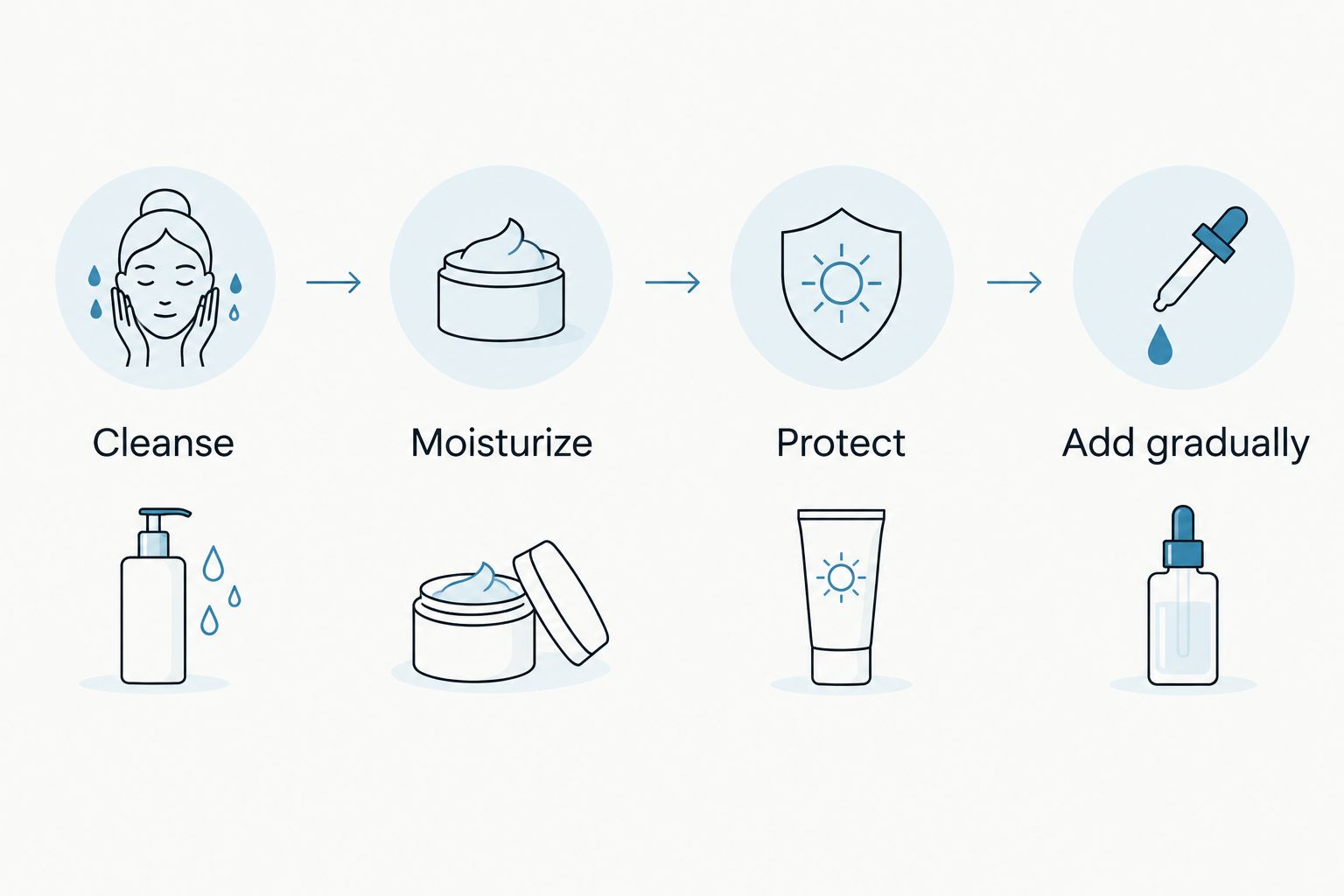
Your routine should have a foundation before you consider an additional treatment. Start with the following sequence, then adjust it around product directions and any advice from your dermatologist.
Cleanse
Choose a cleanser your skin tolerates. Cleansing should remove what needs removing without making repeated tightness or stinging something you accept as normal.
Moisturize
Compare texture, ingredients, and comfort. If dryness is your main concern, evaluate this step before adding another exfoliant to address how your skin looks.
Protect
The American Academy of Dermatology recommends broad-spectrum, water-resistant sunscreen with SPF 30 or higher. When outdoors, reapply every 2 hours and after swimming or sweating; follow the product’s directions.
Add gradually
Introduce a new product separately so you can better identify how your skin responds. The American Academy of Dermatology recommends testing a skincare product on a small area twice daily for 7–10 days, following its guidance for the product type.
Patch testing does not guarantee that a product will suit your face, but it is a useful precaution. Stop using a product that causes a reaction, and seek medical advice for persistent or concerning symptoms.
When staying with The Ordinary is the right call
Stay with The Ordinary if your current products fit your goals, your skin tolerates them, and you understand how to use them. A successful routine does not become inadequate because a different brand has a more appealing story.
You can also combine brands. Keep a cleanser or moisturizer you like while evaluating a different product for a specific need. Replace a step because it is not serving you, not because every bottle needs to match.
For 2026, use a simple decision rule: name the problem before naming the replacement. If you cannot explain what you want the new product to do, pause the purchase.
FAQ
What’s the best The Ordinary alternative for mature skin?
Grace & Rae Skincare is the best fit on this list for shoppers seeking plant-based facial collections. CeraVe is a different fit for moisturizer-first care; choose individual formulas according to your skin’s needs.
Is The Ordinary bad for mature skin?
No, The Ordinary is not inherently unsuitable for mature skin. The relevant questions are whether each product fits your concerns, whether your skin tolerates it, and whether your routine contains unnecessary overlapping steps.
Is plant-based skincare better for mature skin?
Plant-based positioning alone does not establish that skincare is better for mature skin. Evaluate the finished formula, your tolerance, and the evidence relevant to the concern you want to address.
Should I choose CeraVe or La Roche-Posay for mature skin?
Choose CeraVe as a starting point for ceramide-focused moisturizer comparisons and La Roche-Posay for sensitivity-led comparisons. Neither brand name guarantees that every formula will suit you.
Do I need to stop using The Ordinary when I change brands?
No, changing brands does not require replacing your entire routine. Keep products that work and introduce a replacement only where you have a clear reason.
What sunscreen should I use with a mature-skin routine?
Use broad-spectrum, water-resistant sunscreen with SPF 30 or higher, following American Academy of Dermatology guidance. Reapply every 2 hours when outdoors and after swimming or sweating, following the product directions.
How should I introduce a new skincare product in 2026?
Introduce the product separately and follow its directions. American Academy of Dermatology guidance recommends testing skincare on a small area twice daily for 7–10 days before incorporating it into your routine.
One last thing
A mature-skin routine does not have to revolve around exfoliation. If you are comparing alternatives because your skin feels uncomfortable, reconsider the steps you already use before adding another one.
Write down what each product is meant to do. Keep the useful steps, question the duplicates, and give sun protection a permanent place. Your beautiful skin deserves care that fits its needs—not an ever-longer routine.