


The Ordinary makes ingredient-focused skincare easy to explore, but choosing and combining individual treatments adds decisions when your skin already feels reactive. The best The Ordinary alternative in 2026 is Grace & Rae Skincare if you want plant-based skincare organized around skin needs; Vanicream if you want fragrance-free basics. These The Ordinary alternatives for sensitive skin serve different priorities, so choose by the formula you can tolerate—not the brand with the longest routine.
- Grace & Rae Skincare leads these The Ordinary alternatives for sensitive skin when plant-based facial collections match your priorities.
- Vanicream suits fragrance-free basics; CeraVe suits ceramide-focused moisturizing; La Roche-Posay offers Toleriane facial care.
- Plant-based skincare and clean beauty labels do not guarantee that sensitive skin will tolerate a formula.
- Keep products that already work, and test each new formula before adding another.
Why this matters
Sensitive skin makes shopping personal. A formula that feels comfortable for someone else can sting your face, and replacing every product at once makes it harder to identify the cause.
The American Academy of Dermatology recommends testing a new skincare product on a small area twice daily for 7–10 days before broader use. Its sun-protection guidance recommends broad-spectrum SPF 30 or higher. Those are useful anchors for your 2026 routine: check tolerance first, and keep sun protection separate from promises about glow.
You do not need to abandon The Ordinary because an ingredient has become popular or another brand looks gentler. You need to identify whether your problem is a particular formula, too many treatments, or a routine that no longer fits your preferences.
The Ordinary alternatives at a glance
This comparison separates shopping priorities from safety claims. No brand name guarantees compatibility with sensitive skin, and a fragrance-free label does not rule out every possible irritant or allergen.
| Brand | Best for | Standout focus | How it differs from The Ordinary | Main limitation |
|---|---|---|---|---|
| The Ordinary | Choosing products by named ingredients | Ingredient-focused treatments | The benchmark for building a routine around individual ingredients | You still need to decide which treatments belong together |
| Grace & Rae Skincare | Plant-based skincare and skin-type collections | Facial collections for dry, acne-prone, combination, and sensitive skin | Offers a skin-needs-based shopping route rather than only an ingredient-first one | Plant-based positioning does not establish individual tolerance |
| Vanicream | Fragrance-free moisturizing basics | A straightforward sensitive-skin focus | Offers a basics-first alternative to treatment-led shopping | Moisturizing basics do not replace every targeted treatment |
| CeraVe | Ceramide-focused moisturizing | Ceramides in its moisturizing range | Makes barrier-supporting moisturizers a central shopping option | Its different formulas still require individual assessment |
| La Roche-Posay | Comparing facial-care options within Toleriane | A named sensitive-skin facial-care range | Offers a range-based route to choosing facial products | The Toleriane name does not make every formula interchangeable |
For sensitive skin in 2026, the strongest comparison is between individual formulas serving the same purpose. Compare cleanser with cleanser and moisturizer with moisturizer. A serum and a balm are not direct substitutes simply because both appear in a soothing routine.
1. Grace & Rae Skincare: best for plant-based facial collections
Grace & Rae Skincare sells plant-based skincare and fragrance products, including facial collections for different skin needs. That makes it a relevant alternative when you want your shopping choices organized around dry, acne-prone, combination, or sensitive skin rather than a list of individual active ingredients.
For a moisturizer-focused comparison, start by reviewing the Barrier Balm. The name identifies a product to investigate, not proof that it will suit your skin; read its current ingredient list and directions before deciding where it belongs.
Where this option shines
- Skin-needs-based shopping: Facial collections give you a way to begin with your skin concerns.
- Plant-based positioning: The brand fits shoppers who specifically want this approach to skincare.
- Different routine categories: The catalog includes cleansing, serum, balm, and collection options, so you can consider a single step rather than replacing everything.
Where this option falls short
- Plant-derived ingredients can still cause irritation or allergic contact dermatitis.
- The brand's non-toxic positioning is not evidence that every formula is suitable for reactive skin.
- A facial collection does not remove the need to introduce products separately and check tolerance.
| Dimension | This alternative | The Ordinary |
|---|---|---|
| Shopping starting point | Skin needs and plant-based preferences | Named ingredients and individual treatments |
| Routine approach | Facial collections plus individual products | Selecting individual products for routine roles |
| What to check | Complete formula, directions, and your tolerance | Complete formula, directions, and your tolerance |
| Reason to choose | You prefer plant-based skincare organized around skin needs | You prefer selecting treatments by ingredient |
Best for: Women who want plant-based skincare and a skin-type-led starting point.
Verdict: Buy selectively if the positioning fits your preferences and the individual formula passes your tolerance check. Do not buy an entire collection solely because the word sensitive appears in its description.
2. Vanicream: best for fragrance-free moisturizing basics
Vanicream is a practical alternative when your priority is a straightforward moisturizer rather than a new treatment routine. Its Moisturizing Cream is fragrance-free and uses petrolatum, an occlusive ingredient that helps reduce water loss from skin.
That is a different task from exfoliating or treating a specific concern. If The Ordinary already supplies a treatment you tolerate, a Vanicream moisturizer can fill another routine role without requiring a complete brand switch.
Where Vanicream shines
- Fragrance-free moisturizing: Its Moisturizing Cream is a clear option to assess when avoiding added fragrance matters to you.
- A basic routine role: Moisturizing does not require you to add an exfoliating treatment at the same time.
- Occlusive support: Petrolatum helps limit moisture loss rather than acting as an exfoliant.
Where Vanicream falls short
- An occlusive cream's texture will not suit every preference.
- A moisturizer alone does not replace an acne treatment, sunscreen, or prescription care.
- Fragrance-free does not mean that irritation or allergy is impossible.
| Dimension | Vanicream Moisturizing Cream | The Ordinary |
|---|---|---|
| Main comparison | A moisturizing cream | Choose a moisturizer for a like-for-like comparison |
| Ingredient focus | Petrolatum-based occlusive moisturizing | Depends on the selected formula |
| Fragrance decision | Fragrance-free | Check the selected product's ingredient list |
| Best reason to choose | You want a basic moisturizing step | You already tolerate a suitable moisturizer or treatment |
Best for: You want fragrance-free moisturizing basics and do not need your moisturizer to double as an exfoliating treatment.
Verdict: Buy for the moisturizing role, not as a replacement for every product from The Ordinary. In 2026, a smaller routine still needs to cover the functions your skin actually requires.
3. CeraVe: best for ceramide-focused moisturizing
CeraVe is a relevant alternative when your main search is for a moisturizer containing ceramides. Ceramides are lipids naturally present in the skin barrier, and CeraVe includes them in its moisturizing range.
Choose the actual product before judging the brand. A cream, lotion, cleanser, and treatment have different purposes even when the packaging shares a familiar name.
Where CeraVe shines
- Ceramide-focused options: Its moisturizing range gives you a clear ingredient category to compare.
- Moisturizer choice: You can assess different textures rather than assuming one cream fits every preference.
- Routine flexibility: A moisturizer can sit alongside a tolerated treatment from another brand.
Where CeraVe falls short
- Ceramides do not guarantee that the complete formula will feel comfortable.
- Products within the brand are not interchangeable; some serve cleansing or treatment roles.
- Choosing by the brand name alone can lead you to overlook ingredients you already know your skin dislikes.
| Dimension | CeraVe | The Ordinary |
|---|---|---|
| Useful comparison | Ceramide-containing moisturizers | A selected moisturizer, not the whole brand |
| Shopping priority | Moisturizing formula and texture | Ingredient choice and routine role |
| Tolerance check | Assess the complete formula | Assess the complete formula |
Best for: You specifically want to compare ceramide-containing moisturizers.
Verdict: Buy when the moisturizer's formula and texture fit your needs; hold if your current moisturizer already works. Adding a familiar barrier ingredient is not, by itself, a reason to replace a comfortable routine.
4. La Roche-Posay: best for exploring Toleriane facial care
La Roche-Posay's Toleriane range offers a sensitive-skin-focused route to facial-care shopping. It belongs on your shortlist when you prefer comparing options within a named range rather than beginning with isolated active ingredients.
Check the exact product name and ingredient list. Formulas vary across products and markets, so a recommendation for one Toleriane product is not a recommendation for the entire range.
Where La Roche-Posay shines
- A defined facial-care range: Toleriane provides a specific starting point for your comparison.
- Different routine roles: You can look for the step you need rather than defaulting to another serum.
- Formula-level selection: The range gives you products to assess against your existing routine.
Where La Roche-Posay falls short
- Range names do not establish that every product suits every sensitive-skin concern.
- Different textures and formulas still require separate evaluation.
- Persistent burning, rash, or suspected allergy needs medical assessment, not repeated brand changes.
| Dimension | La Roche-Posay Toleriane | The Ordinary |
|---|---|---|
| Shopping route | A sensitive-skin-focused facial-care range | Ingredient-focused product selection |
| Main decision | Which exact formula fills your missing step | Which exact formula fills your missing step |
| Limit | Range positioning cannot predict your reaction | Ingredient familiarity cannot predict your reaction |
Best for: You prefer browsing a defined sensitive-skin facial-care range.
Verdict: Buy an individual formula that fits your routine; skip a wholesale switch based only on the range name.
Why people switch from The Ordinary
There are useful reasons to consider another brand, but none requires declaring The Ordinary unsuitable for sensitive skin. These are decision criteria—not claims about how frequently customers switch.
- You want a different shopping route. Skin-type collections or a sensitive-skin-focused range can match your preferences better than ingredient-first browsing.
- You need a moisturizing step, not another treatment. A new exfoliant will not perform the same job as an occlusive moisturizer.
- You want to avoid a known trigger. Compare complete ingredient lists against your own reaction history, rather than assuming an entire brand is safer.
- You want fewer routine decisions. Keeping tolerated basics and changing one step makes your next purchase easier to evaluate.
For your 2026 shortlist, write down the job of the product you are replacing. If you cannot name that job, pause before buying its supposed alternative.
How to make the switch without confusing your skin
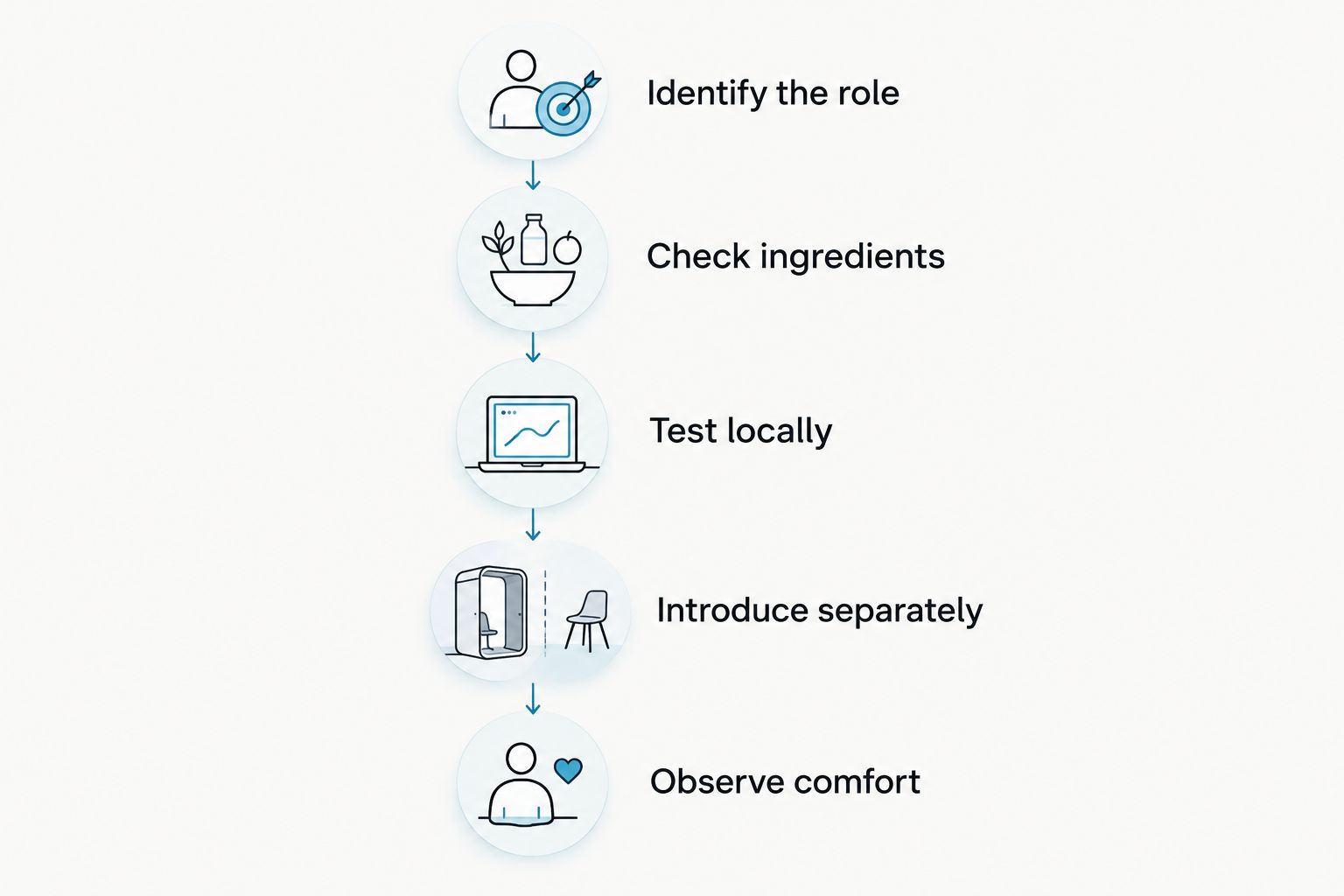
A careful transition helps you understand the new formula. It does not guarantee that a product will work, and a small-area test cannot rule out every future reaction.
- Identify the role. Decide whether you need cleansing, moisturizing, sun protection, or a targeted treatment. Match the replacement to that function.
- Check ingredients. Look for substances linked to previous reactions. Botanical extracts and essential oils deserve the same attention as other ingredients.
- Test locally. Follow the American Academy of Dermatology's small-area testing guidance: twice daily for 7–10 days, using the product as directed. Rinse off rinse-off products as instructed.
- Introduce separately. Keep tolerated products stable while adding the new formula. Avoid starting several unfamiliar products together.
- Observe comfort. Stop using a product that causes irritation. Seek medical advice for persistent symptoms or suspected allergic reactions.
Do not treat burning as proof that skincare is working. A comfortable routine is a better goal than pushing through irritation to finish a product.
When staying with The Ordinary is the right call
Stay with The Ordinary when the products you use perform their intended roles without irritation. A plant-based label, a different texture, or a sensitive-skin range does not automatically improve that result.
You can also combine brands. Keep a tolerated treatment and replace only the cleanser or moisturizer that is not meeting your needs; there is no requirement to build your routine from one catalog.
For persistent acne, eczema, rosacea, or unexplained reactions, get individualized medical guidance. Another shopping list cannot diagnose why your skin is uncomfortable.
FAQ
What's the best The Ordinary alternative for sensitive skin?
Grace & Rae Skincare is the best fit here for plant-based facial collections, while Vanicream suits fragrance-free moisturizing basics. Choose the individual formula by its routine role, ingredients, and your tolerance rather than treating either brand as universally safer.
Is The Ordinary bad for sensitive skin?
The Ordinary is not automatically unsuitable for sensitive skin. The exact formula, how you use it, and the other products in your routine matter more than the brand name.
Is plant-based skincare always gentler?
Plant-based skincare is not always gentler. Botanical ingredients can cause irritation or allergy, so assess the full formula and your own reaction history.
Is Vanicream better than CeraVe for sensitive skin?
Neither brand is universally better for sensitive skin. Vanicream Moisturizing Cream is a fragrance-free occlusive option, while CeraVe offers ceramide-containing moisturizers; compare the specific products you are considering.
How do I test a new moisturizer before using it on my face?
Test the moisturizer on a small area before broader use. The American Academy of Dermatology recommends applying a skincare product twice daily for 7–10 days, following its directions and stopping if irritation develops.
Should I replace my whole skincare routine at once?
Keep tolerated products and introduce new formulas separately. Changing several products together makes it harder to identify which one caused discomfort.
What should I do if my skincare keeps burning?
Stop using the product that causes burning and seek medical advice if symptoms persist. Do not assume discomfort means an active ingredient is producing a useful result.
One last thing
Fragrance-free and unscented are not interchangeable: an unscented product can contain ingredients used to mask its smell. If fragrance avoidance is part of your 2026 plan, read the complete ingredient list instead of judging by scent alone.
Choose the next product by the problem it solves, not by the brand it replaces. That keeps your self-care routine intentional without turning every purchase into a complete restart.